Featured Entries from the Photoseed Blog

Unknown Photographers
15 Entries

Eternal Sunny Rest

May 2019 | Documentary Photography, Unknown Photographers

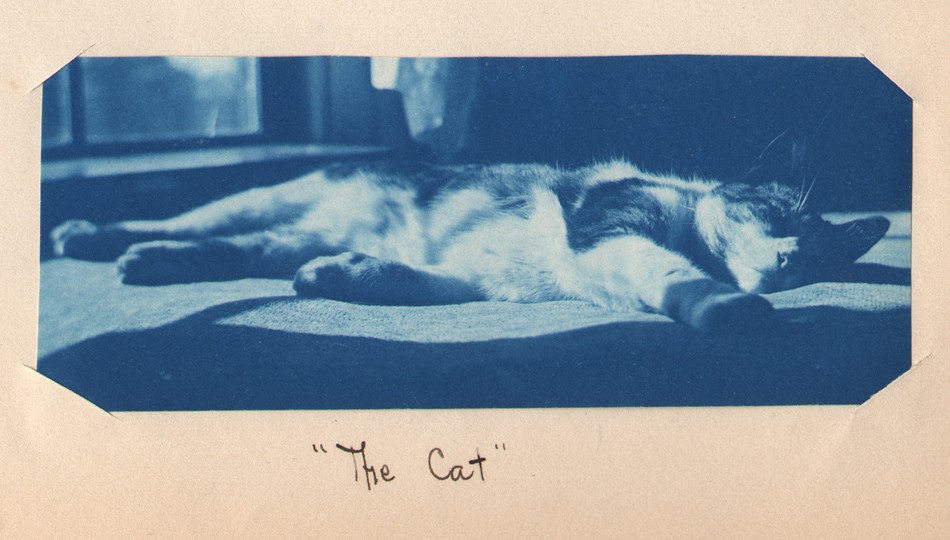
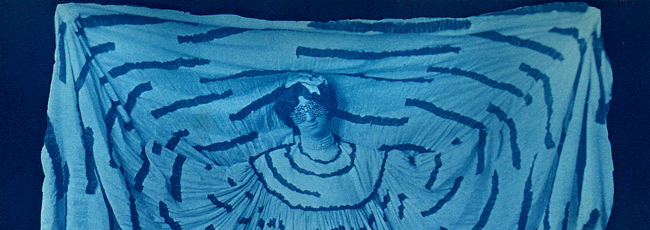
I lost my mother-in-law this past Easter. Besides her strong faith, which made Maria Meek’s passing on the Christian day of renewal seem like destiny after a nearly 20-year battle with various cancers, her selfless devotion to cats will always remain with me.

“The Cat” (Probably Tenney House, at Smith College in Northampton, MA) Unknown American photographer: Cyanotype: ca. 1900 (4.9 x 12.0 cm | 18.2 x 27.5 cm loosely inserted within thin, manilla album leaf)  In love and remembrance for Maria Meek: 1949-2019. From: PhotoSeed Archive

Like this feline, who bear’s an uncanny resemblance to Maria’s beloved Oscar, one of her many rescues who went from cold factory floor to a home-life of pampered bliss, please consider a donation to your local Humane Society or pet shelter in remembrance to those whom you have loved.

From the Trenches a Century On

Nov 2018 | Advertising, History of Photography, Photography, Significant Photographs, Unknown Photographers

For your consideration, we offer a happier vision of patriotic leanings supporting the home-front on this milestone day in history marking the end of  World War 1.

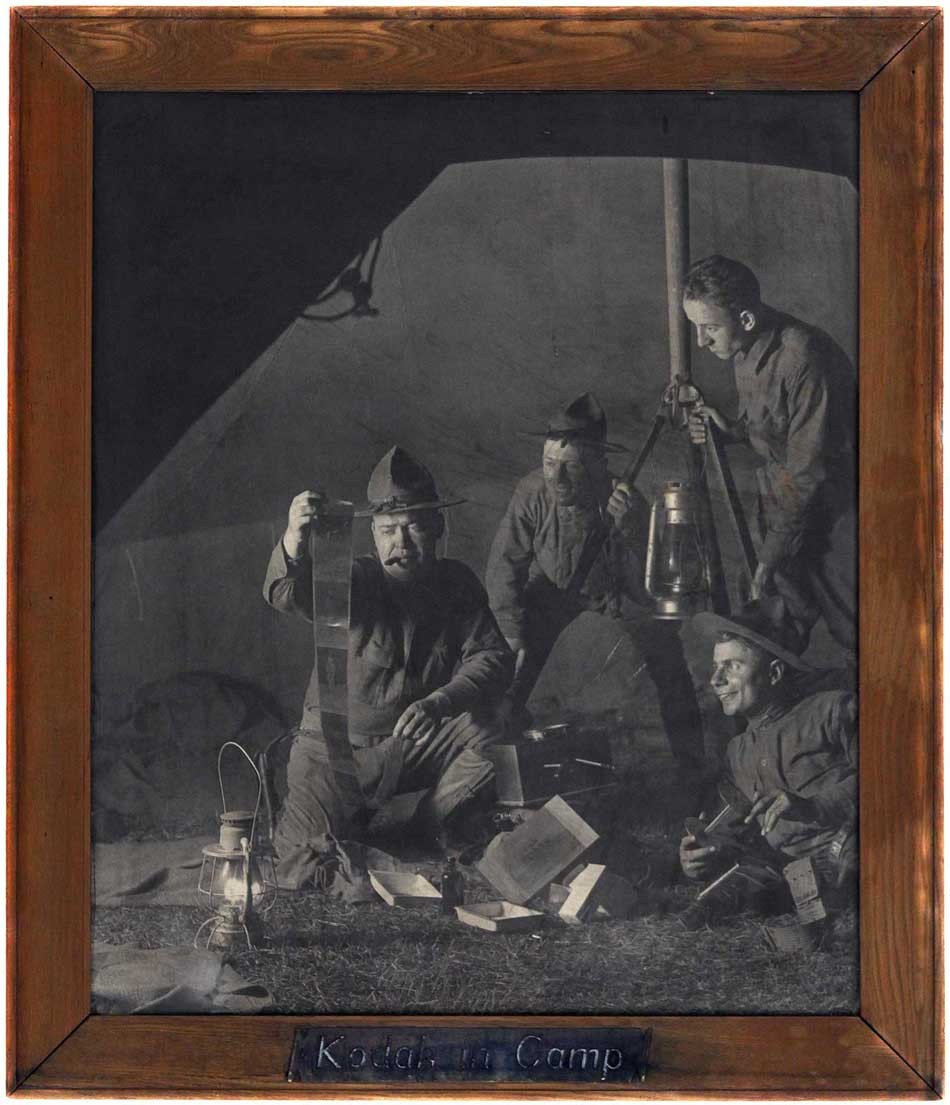
“Kodak in Camp”: vintage framed bromide print ca. 1917 by unknown American photographer: Image Dimensions: 71.4 x 60.0 | cm 83.2 x 71.8 cm stained oak frame. This rare mammoth-sized Kodak advertising photograph featuring American “Doughboys” working together developing film in their tent at night was used by the Eastman company in their “Take a KODAK With You” advertising campaign. In late 1917, it appeared in publications including The Saturday Evening Post and The Independent (with which is incorporated Harpers Weekly) From: PhotoSeed Archive

On the Eleventh Hour of the Eleventh Day of the Eleventh Month- November 11, 1918, the signing of the Armistice ending the Great War took place 60 kilometers north of Paris inside a railway carriage parked in the Forest of Compiègne. It has now been 100 years since that fateful day, on that fateful month and on that fateful hour. Sadly, mankind seems doomed to repeat his failures.

But a pivoting to Photography in relation to these weighty issues will always be of interest to the historian.

In 1914, the role of the medium expanded greatly at the outset of World War 1. In addition to photography’s new found power through smaller cameras to document unspeakable human suffering and death by the millions brought about by trench warfare, aerial reconnaissance photography gave countries the ability to monitor troop movements and to devise strategy in nearly real time. And then there was the home-front. The Eastman Kodak Company was certainly not going to let a war get in the way in order to call attention to their brand and sell more product.

Retooling like other large concerns in order to become an essential military contractor, they saw American Doughboys entering the war late in the conflict as brand ambassadors. As proof, the Kodak Vest Pocket camera, which debuted in 1912, found its’ way onto the front lines and trenches of many battlefields-legally or otherwise, and advertising posters hawking the camera as well as this oversized framed bromide print of soldiers for darkroom supplies and film called Kodak in Camp prominently appeared displayed in camera shops throughout the country.

And Kodak went further. As part of their national print advertising campaign dubbed “Take a KODAK with you“, this photo of nighttime developing in camp appeared full page in the pages of the Saturday Evening Post magazine for their August 4, 1917 issue as well as other publications around that time.

But most importantly, we honor the memory today of all the fallen. In a tribute to just one, a Scottish photographer by the name of Nichol Elliot, whose 1917 death in wartime Belgium is memorialized by a volume of his pictorial photographs accompanied by poems written by his wife Alice Elliot, we give her final stanza from An Idyll of Peace:

How swift from summer idylls came the wrench
Of life flung thence, by war and manhood’s will,
To battle roar and glare, or deathly chill
Of watch and warfare in the nightmare trench!
For peace divine man paid diviner price
In world-wide idyll of high sacrifice.


-Paired with Nichol Elliot photograph: In the Island, Toronto

For additional background on photography and the Great War, check out this New York Times Lens blog post from 2014.

Laurels for Ivy

May 2018 | Alternate Processes, Cameras, Documentary Photography, Unknown Photographers

Ivy, at least the evergreen variety known to climb and adhere to brick walls, is academically synonymous mostly in the northeastern United States with that of the Ivy League. But this isn’t about those educational institutions and membership in the well-known sports league. Rather, ivy for the purposes of this post during late Spring is symbolic for the ties that will bind newly minted graduates at this time of year: “The connection between the college and its graduates”, is how Smith College in Northampton, Massachusetts aptly describes it, and the continuing reason her senior offspring have, since 1884, ceremonially planted it on a special day before Commencement.

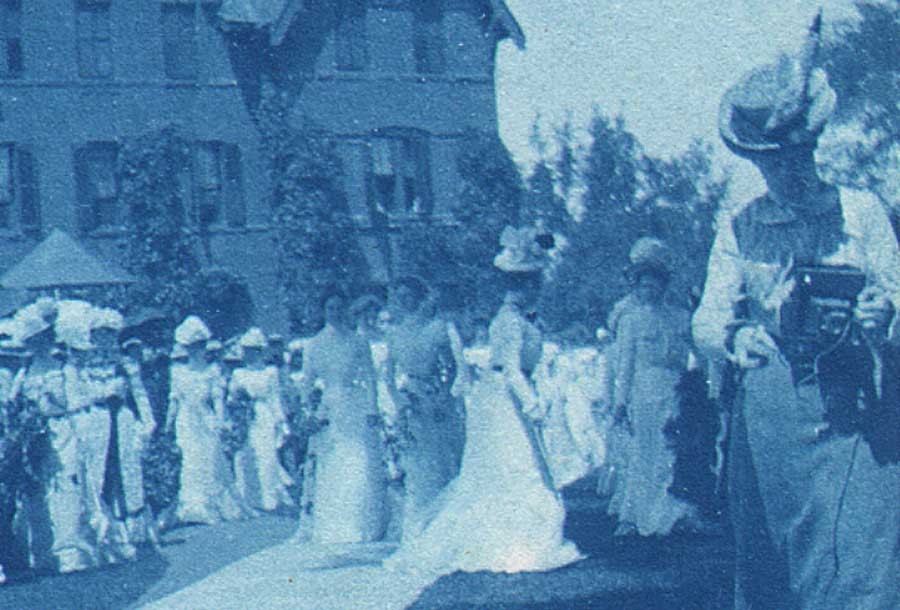
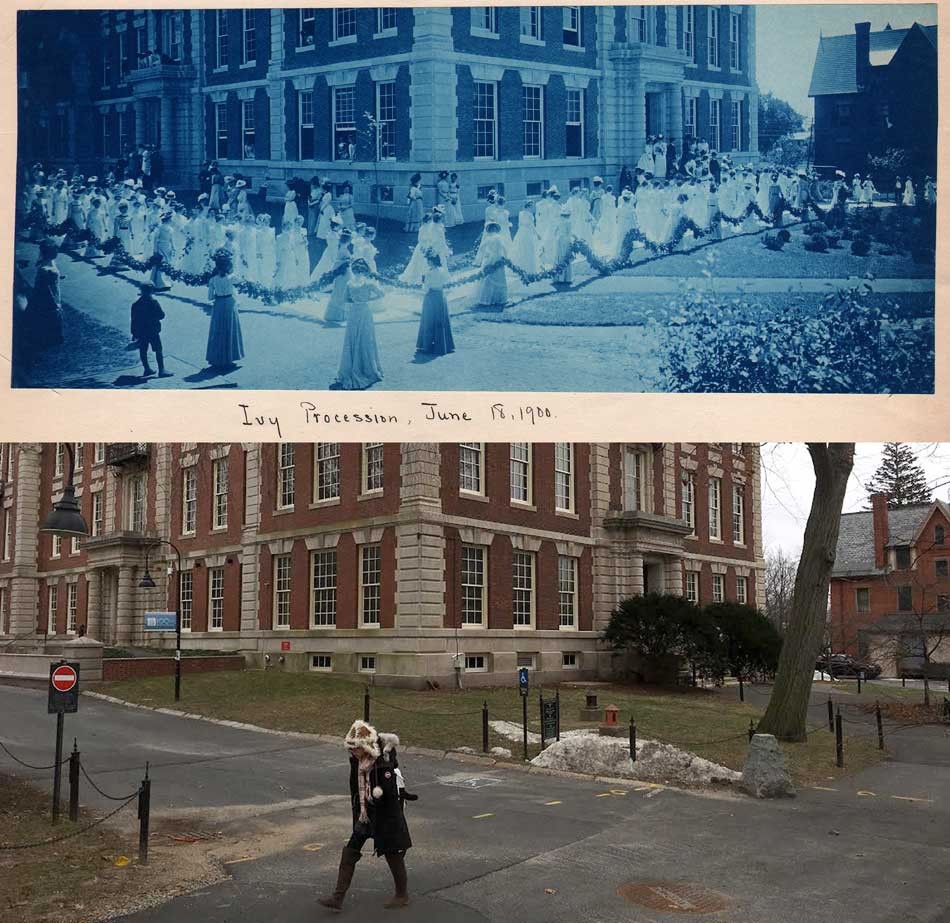
Detail: “Ivy Procession June 18, 1900”: vintage cyanotype loosely inserted into dis-bound album leaf: ca. 1900 by unknown American photographer: 10.0 x 24.8 cm | 18.2 x 27.5 cm. Ivy Day at Smith College in Northampton, Massachusetts, the day before Commencement, begins with a procession of graduating seniors walking around Seelye Hall on campus. They are flanked by junior students in foreground carrying the ivy chain, which is actually made of laurel leaves. Notice the two women and young boy at far right of frame photographing the scene with box cameras. Leaf from larger album with direct provenance to Mary Ruth Perkins, 1878-1975; Smith College class of 1900 graduate and Chairman of the class yearbook committee that year. From: PhotoSeed Archive

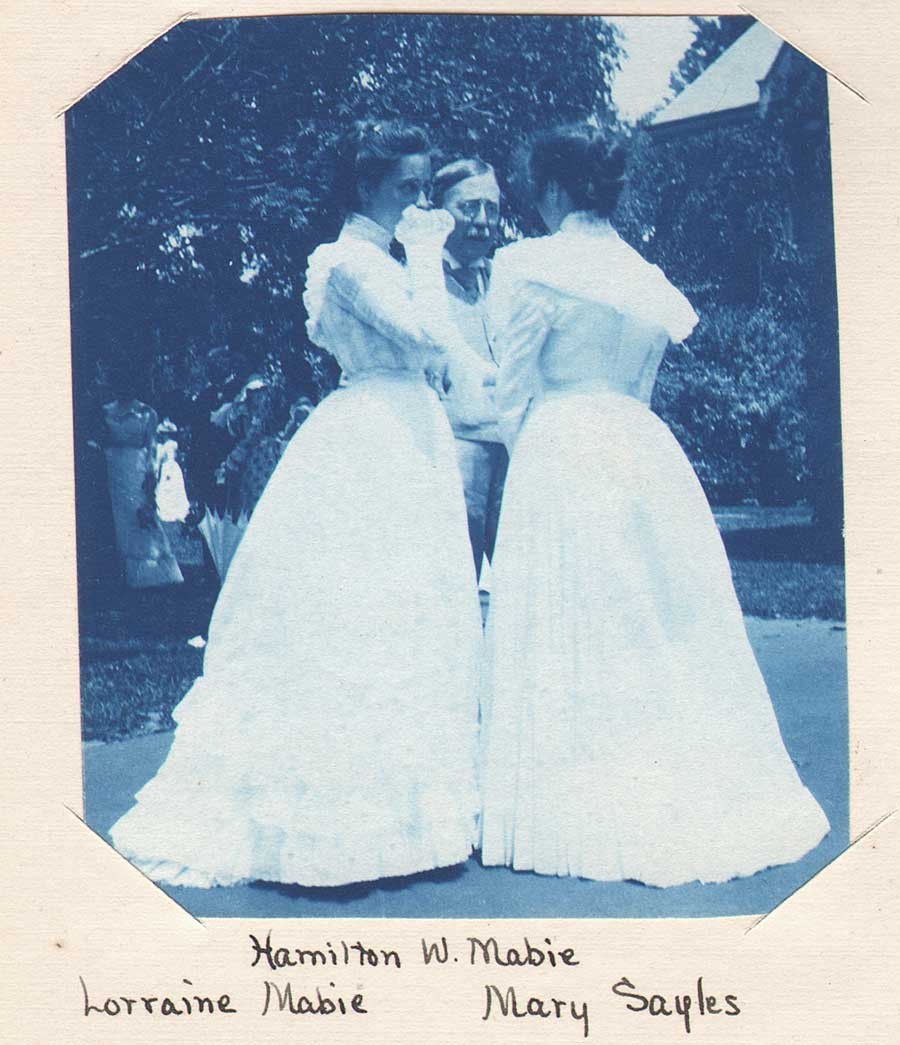
“Hamilton Wright Mabie: Smith College Class of 1900 Commencement Speaker”: vintage cyanotype loosely inserted into dis-bound album leaf: ca. 1900 by unknown American photographer: 8.5 x 7.2 cm | 18.2 x 27.5 cm. Mabie, 1846-1916, an American essayist, editor, critic, and lecturer who attended Williams College and Columbia Law School, is shown here in the background along with two Smith graduates: his daughter at left Lorraine Trivett Mabie -1877-1906, and Mary Buell Sayles – 1878-1959, who went on to become a noted social reformer, writer and educator. In 1902, Sayles conducted the first “systemic study of housing conditions in Jersey City” (Davis-1984) and was a New York City housing inspector. Leaf from larger album with direct provenance to Mary Ruth Perkins, 1878-1975; Smith College class of 1900 graduate and Chairman of the class yearbook committee that year. From: PhotoSeed Archive

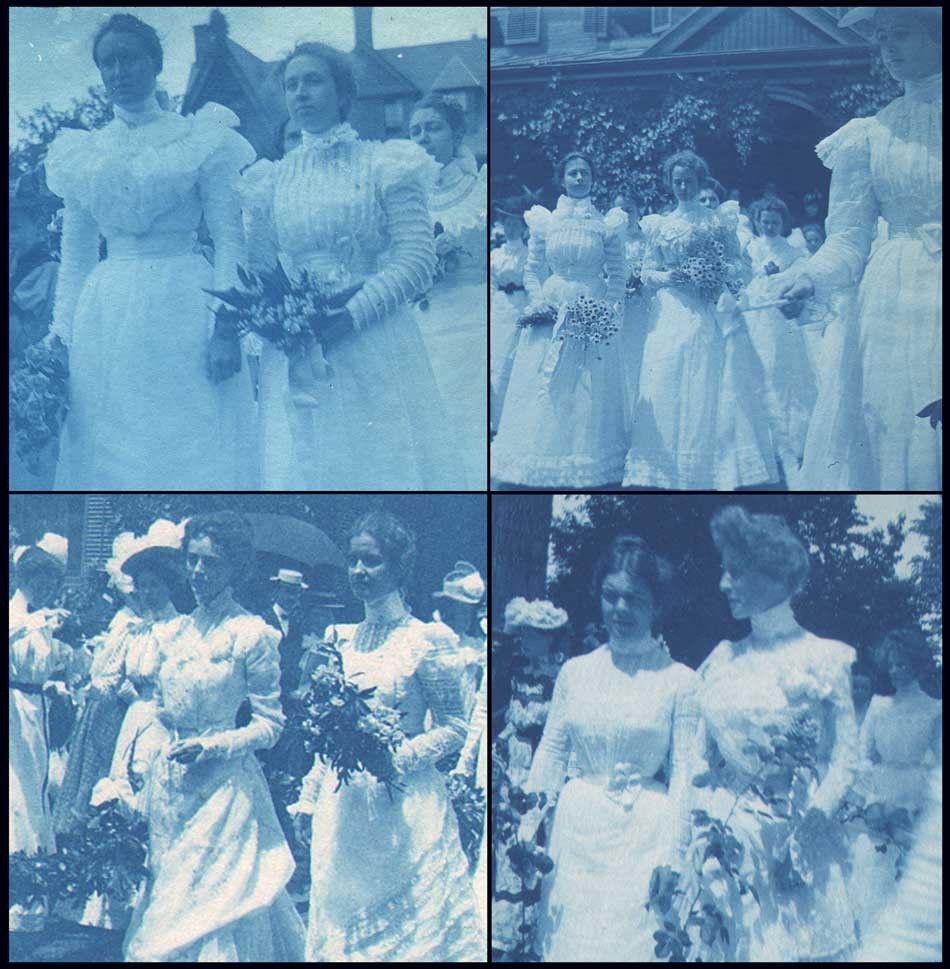
Detail: “Head of Ivy Procession” (June 18, 1900): vintage cyanotype loosely inserted into dis-bound album leaf: ca. 1900 by unknown American photographer: 7.5 x 8.5 cm | 18.2 x 27.5 cm. With the front of the Smith College Ivy Day Procession made up of graduating seniors Cornelia Gould, Carol Weston, Caroline Marmon and Harriette Ross making their way forward in background, a woman with camera at far right of frame walks to position herself for a good vantage point. Leaf from larger album with direct provenance to Mary Ruth Perkins, 1878-1975; Smith College class of 1900 graduate and Chairman of the class yearbook committee that year. From: PhotoSeed Archive

Details: “Head of Ivy Day Procession: 1897-1900” (Smith College, Northampton, Massachusetts). All: vintage cyanotypes loosely inserted into dis-bound album leaves: ca. 1897-1900 by unknown American photographers with each leaf: 18.2 x 27.5 cm. Upper left: 1897: 9.4 x 11.4 cm; Upper right: 1898: 9.5 x 12.0 cm; Lower left: 1899 (Louise & Carrolle Barber) 8.5 x 5.5 cm; Lower right: 1900 (Cornelia Gould, Carol Weston, Caroline Marmon, Harriette Ross) 8.1 x 5.5 cm. Leaves from larger album with direct provenance to Mary Ruth Perkins, 1878-1975; Smith College class of 1900 graduate and Chairman of the class yearbook committee that year. From: PhotoSeed Archive

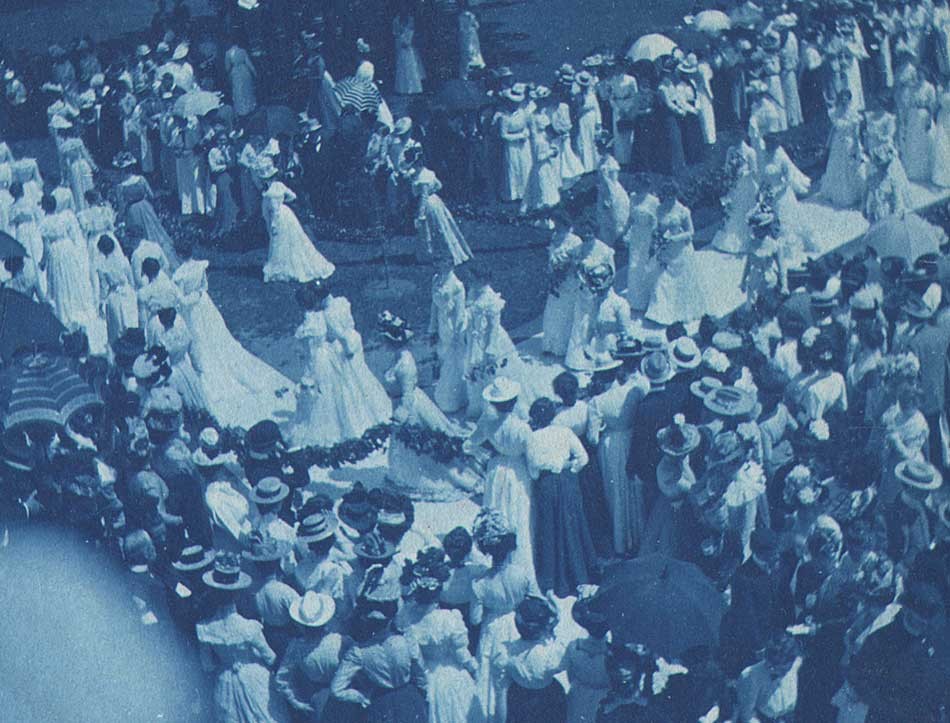
Detail: “Ivy Procession on the way from College Hall around Seelye Hall” (June 18, 1900): vintage cyanotype loosely inserted into dis-bound album leaf: ca. 1900 by unknown American photographer: 8.3 x 8.5 cm | 18.2 x 27.5 cm.Taken from an overhead angle, this photograph shows throngs of hat wearing spectators in foreground and background watching the procession of graduating Smith College seniors. Each wearing their traditional long white dresses, they walk in pairs while flanked by junior class members holding the ivy chain made from laurel leaves. Leaf from larger album with direct provenance to Mary Ruth Perkins, 1878-1975; Smith College class of 1900 graduate and Chairman of the class yearbook committee that year. From: PhotoSeed Archive

Top: “Ivy Procession June 18, 1900”: vintage cyanotype loosely inserted into dis-bound album leaf: ca. 1900 by unknown American photographer: 10.1 x 24.5 cm | 18.2 x 27.5 cm. Ivy Day at Smith College in Northampton, Massachusetts, the day before Commencement, begins with a procession of graduating seniors walking around Seelye Hall on campus. They are flanked by junior students in foreground carrying the ivy chain, which is actually made of laurel leaves. From the college website: “Ivy Day has been a Smith tradition for more than a century. The class of 1884 was the first to plant ivy as part of the ceremonies leading to its graduation, thus providing the day with its name.” Leaf from larger album with direct provenance to Mary Ruth Perkins, 1878-1975; Smith College class of 1900 graduate and Chairman of the class yearbook committee that year. From: PhotoSeed Archive. Bottom: “Seelye Hall, Smith College Campus”. From the same vantage point as the panoramic photograph taken above, this digital iPhone photograph from January 15, 2018 shows what the campus looks like today. Named after the first president of the college L. Clark Seelye, construction on Seelye began in 1898 and it opened the following year. Photo by David Spencer for PhotoSeed Archive.

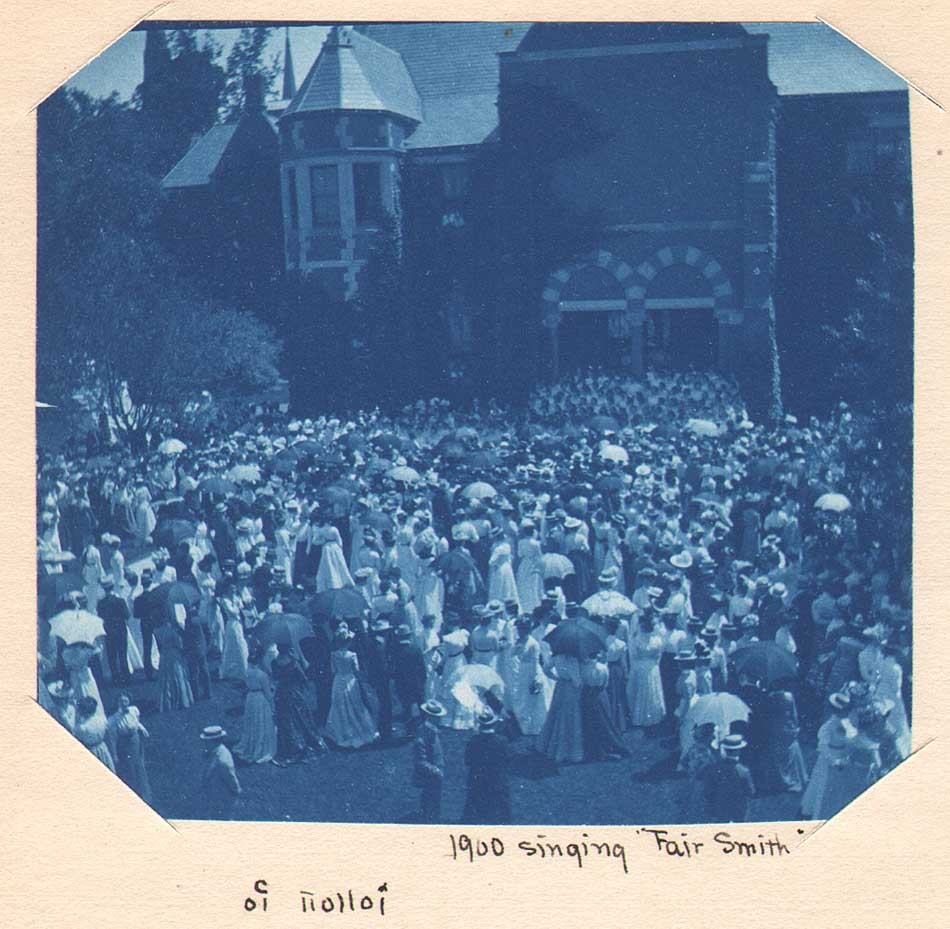
“Singing Fair Smith”: vintage cyanotype loosely inserted into dis-bound album leaf: ca. 1900 by unknown American photographer: 7.7 x 8.5 cm | 18.2 x 27.5 cm. On Ivy Day at Smith College in Northampton, Massachusetts, hundreds gather in front of College Hall to watch members of the choir assembled on the steps sing the traditional 1890 song “Fair Smith”. The lyrics are by R.K. Crandall and Dr. B.C. Blodgett: “Fair Smith, our praise to thee we render, O dearest college halls, Bright hours that live in mem’ry tender, Are wing’d within thy walls. O’er thy walks the elms are bowing, Alma Mater, Winds ‘mid branches softly blowing, Ivy round thy tower growing, Alma Mater. “And while the hills with purple shadows Eternal vigil keep Above the happy river meadows, In golden haze asleep. May thy children still addressing, Alma Mater. Thee with grateful praise addressing, Speak in loyal hearts thy blessing, Alma Mater.” Leaf from larger album with direct provenance to Mary Ruth Perkins, 1878-1975; Smith College class of 1900 graduate and Chairman of the class yearbook committee that year. From: PhotoSeed Archive

“Head of Procession reaching Ivy”: vintage cyanotype loosely inserted into dis-bound album leaf: ca. 1900 by unknown American photographer: 8.3 x 5.4 cm | 18.2 x 27.5 cm. Smith College graduating seniors who headed up the Ivy Day Procession on June 18, 1900-Cornelia Gould, Carol Weston, Caroline Marmon and Harriette Ross, stand at the base of Seelye Hall where they prepare to plant ivy plant seedlings. Leaf from larger album with direct provenance to Mary Ruth Perkins, 1878-1975; Smith College class of 1900 graduate and Chairman of the class yearbook committee that year. From: PhotoSeed Archive

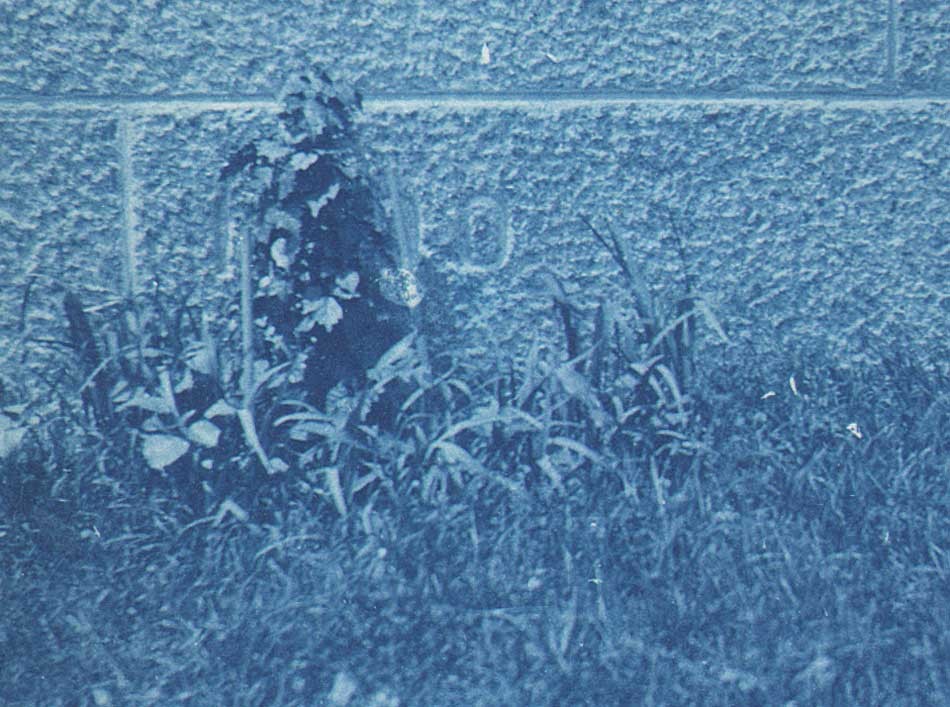
Detail: “Ivy vine seedling at base of Seelye Hall”: vintage cyanotype loosely inserted into dis-bound album leaf: ca. 1900 by unknown American photographer: 8.3 x 8.0 cm | 18.2 x 27.5 cm. The evidence of Ivy Day at Smith College on June 18, 1900 is this Ivy seedling, planted against the year “1900” chiseled into the base of the then brand new Seelye Hall, a rusticated Georgian Revival building on campus designed by the New York firm of York and Sawyer. Construction on this surviving academic building which first housed classrooms and a library began in 1898 and was completed in 1899. The building took its name from L. Clark Seelye, (1837-1924) the first president of Smith College who served from 1875-1910. Rockefeller Hall at Vassar, an 1897 commission by the same firm, was the model for Seelye. Leaf from larger album with direct provenance to Mary Ruth Perkins, 1878-1975; Smith College class of 1900 graduate and Chairman of the class yearbook committee that year. From: PhotoSeed Archive

In 1900, when these cyanotype photographs were taken, a new century beckoned on Ivy Day for those who would soon graduate from Smith. Like then as in the present, newly minted graduates the world over feel the same emotions that strains of Pomp and Circumstance invoke and traditions call for. Laurels are bestowed for hard work, fortunes and insight will be made or come from it, and hopefully, friendships made during college days will endure far into the future.

Summer Love & Remembrance

Jul 2017 | Color Photography, Fashion Photography, Unknown Photographers

 From days gone by, an early summer scene for your viewing fancy.

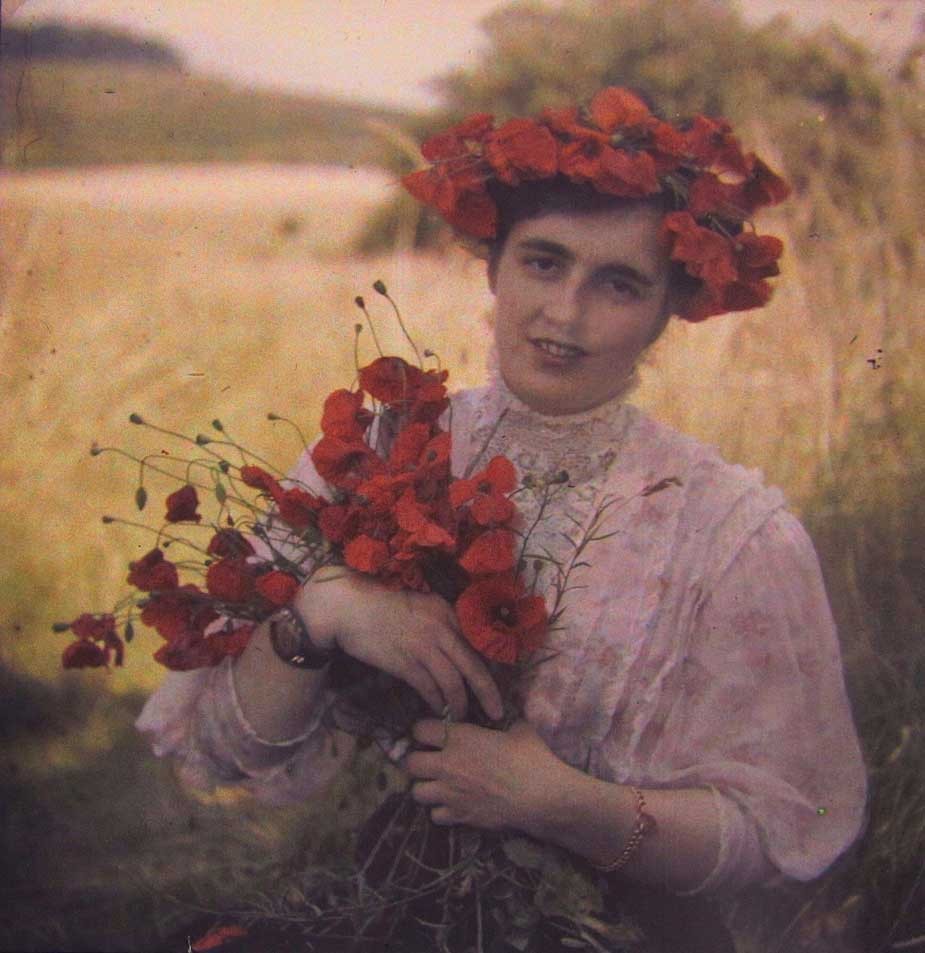
“Woman with Poppies”: vintage Autochrome glass plate: Anonymous, perhaps British photographer: ca. 1910-20: 8.2 x 8.2 cm. Autochrome, the first practical color photographic process, was invented and first patented by Auguste and Louis Lumière of France in 1903. Commercially available beginning in 1907 and championed by pictorialist photographers the world over, Wikipedia states Autochrome was an additive color mosaic screen plate process. “The medium consists of a glass plate coated on one side with a random mosaic of microscopic grains of potato starch dyed red-orange, green, and blue-violet which act as color filters. Lampblack fills the spaces between grains, and a black-and-white panchromatic silver halide emulsion is coated on top of the filter layer.” From: PhotoSeed Archive

See other examples of early color views in various processes from PhotoSeed here.

Freedom of Jones

Jul 2017 | Documentary Photography, History of Photography, Unknown Photographers

That experiment of American Democracy, culminating in our annual celebration today of the Fourth of July holiday, has survived 241 times since that fateful Philadelphia signing, in 1776, of a remarkable document giving notice to the larger world our Declaration of Independence and legal right to self-rule, with benefits.
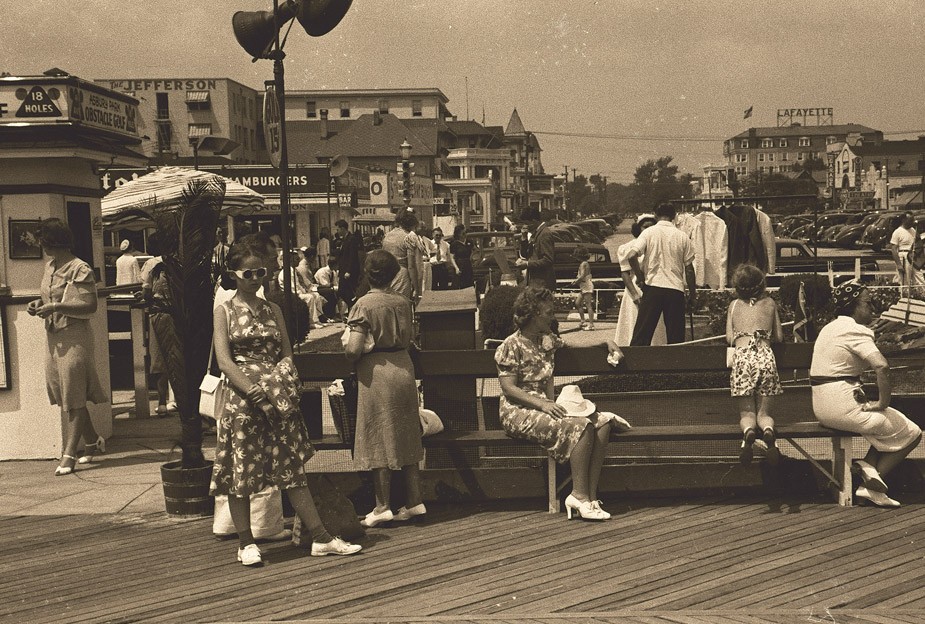
Detail: “Asbury Park Boardwalk”: Laural J. Jones, American: 2004 digital scan taken from ca. 1938-1945 black and white film negative: A woman who may have become the photographer’s second wife, Edith, sits with a white hat on her lap on a bench at center in this bustling summer boardwalk scene taken at the Fourth Ave. entrance. The 18-hole Asbury Park Obstacle Golf course can be seen directly behind the bench at center and at left. Courtesy: Private Florida Collection

Freedom of expression, and with it speech as it relates to the right of picking up a camera and chronicling daily life in one own’s creative bent without fear or favor are American freedoms held dearly by this website. I long hope our presently divided country can see the worth and value of all her citizens understanding each other and getting along for the betterment of the whole.
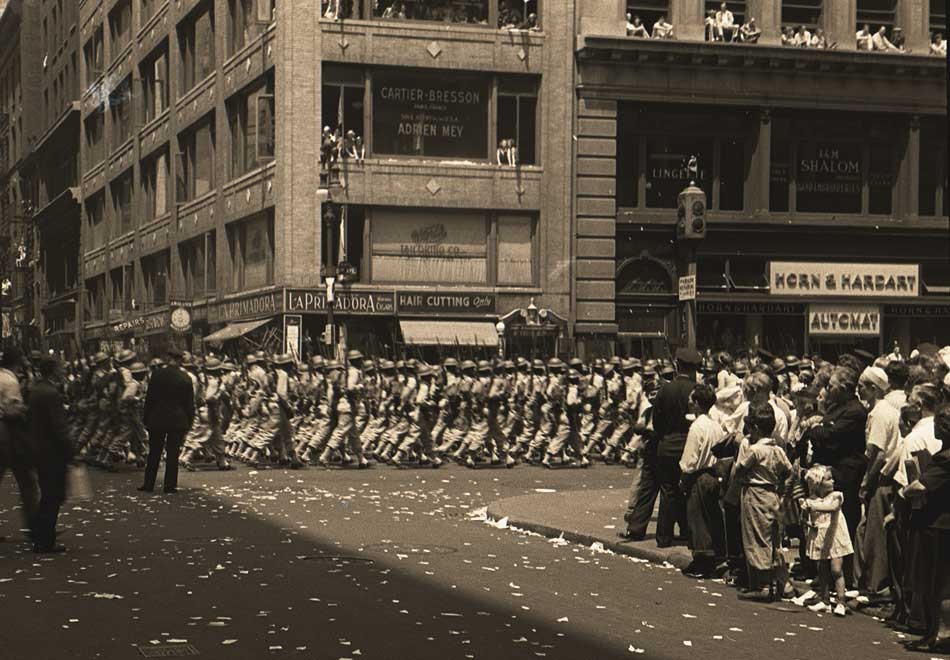
Detail: “Fifth Avenue Military Parade”: Laural J. Jones, American: 2004 digital scan taken from ca. 1938-1945 black and white film negative: Possibly taken before World War II, a little girl at far right holds an American flag as US infantry troops march up Fifth Ave. in New York City. The location of the photograph is W. 27th Street. The former La Primadora Havana Cigar shop can be seen at center at 234 Fifth Ave. and a Horn & Hardart automat is in the lower floor retail area next door at 236 Fifth Ave. Courtesy: Private Florida Collection

Not Lost Forever: the work of Laural J. Jones


With the blessing of a good friend who owns this documentary work in the form of developed 35mm black & white film negatives, and dating more than 20 years past the offerings of the more typical pictorialist body of work featured on PhotoSeed, I’m taking advantage of America’s national holiday to introduce to the world a gentleman who knew a thing or two about self-expressionistic ideals enshrined in our Constitution, the work of American amateur photographer Laural J.(ohn) Jones. (1897-1980)
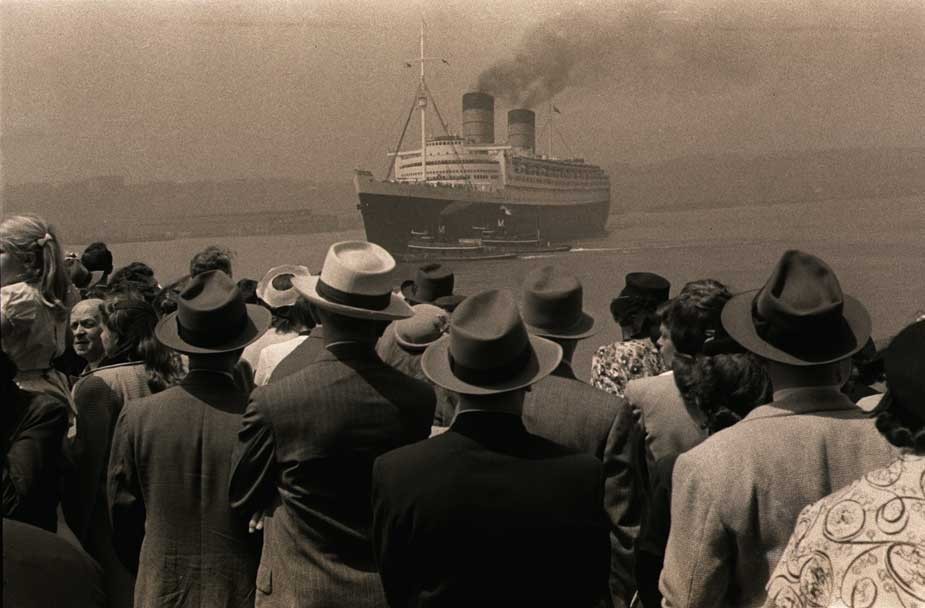
Detail: “RMS Queen Elizabeth in New York Harbor”: Laural J. Jones, American: 2004 digital scan taken from ca. 1940-1945 black and white film negative: Although it is unknown when this photograph was taken, onlookers witness the famed 85,000 ton RMS Queen Elizabeth ocean liner in this photo. She initially docked on March 7, 1940 at Pier 90 in quarantine anchorage off Staten Island following a secret voyage to the US from Greenock, Scotland in order to evade German bombers. Courtesy: Private Florida Collection

Reminiscent in some ways to the much larger body of unknown photographs done by Chicago nanny Vivian Maier (1926-2009) after her life’s work was rescued from a storage locker in 2007, Jones work by contrast and fate was preserved in only two shoe boxes. Residing for more than five years in a Florida antique store before being discovered and saved, spooled negatives by Laural Jones along with an assortment of very small printed photographs are believed to have been placed there from an estate sale originating from the photographer’s second wife Edith, who had lived with Laural in the community of Harbour Oaks, south of Daytona Beach.  
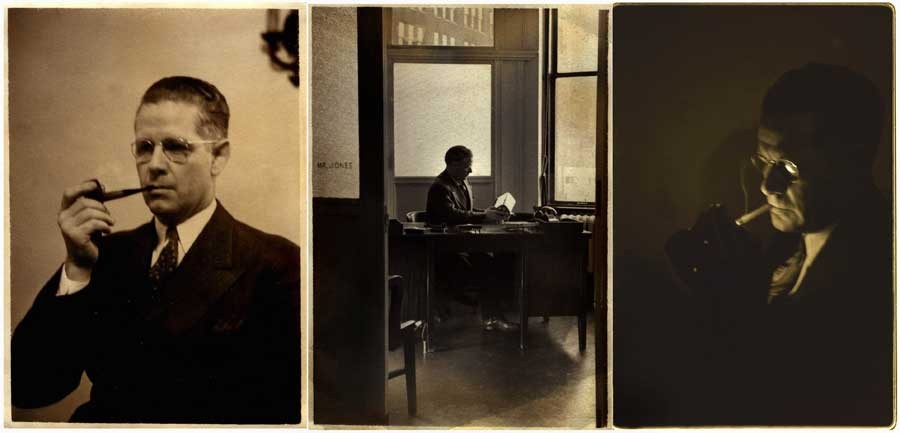
“Self-Portraits of Laural J. Jones: 1897-1980”: Laural J. Jones, American: 2004 digital scans taken from ca. 1938-1953: black and white film negatives: The photographer is seen here in a series of self portraits with the center view taken at his office in New York City, where he was employed as the secretary of purchasing for Bell Bakeries, Inc. Courtesy: Private Florida Collection

Since all that remains are negatives, and with sparse details of his life slowly emerging from US Census and other web resources and records only recently, the Michigan-born Jones is known to have owned the then-new Leica camera sometime around 1938, around the time he is believed to have commenced his early interest in photography. In one surviving photograph stamped 1942 that is an obvious self-portrait, the photographer is nattily dressed and smoking a pipe while he inspects a copy of Popular Photography magazine.
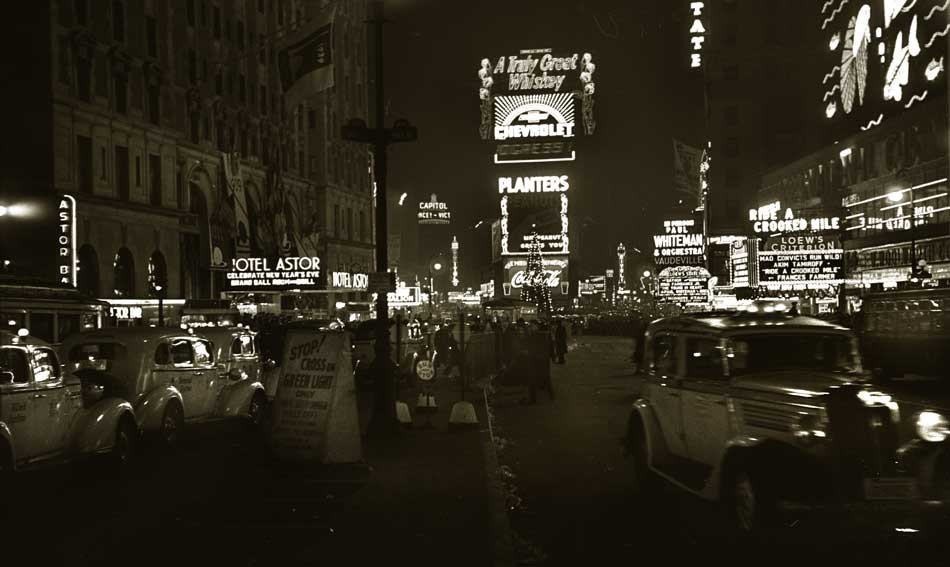
Detail: “1938: Times Square at Night”: Laural J. Jones, American: 2004 digital scans taken from ca. 1938 black and white film negative: In this view showing Times Square at night in New York City taken between Christmas and New Year’s Eve 1938, a large banner for the year 1939 hangs above the entrance to the Hotel Astor at far left which exclaims those to Celebrate New year’s Eve in their Grand Ball Room and Grill. A large lighted Christmas tree is in center background while at far right, the Loew’s Criterion marquee advertises in glowing lights the American movie western “Ride a Crooked Mile” starring Akim Tamiroff and Frances Farmer. Courtesy: Private Florida Collection

Earlier, on Thanksgiving day in 1918, he was first married to the former Ruby A. Armour, (1899-1977) and is listed in a newspaper wedding announcement from the time as being the assistant manager of the Grand Leader Department Store in Battle Creek, with Ruby working there as a clerk. The year of the marriage, the future photographer is described as tall and slender with blue eyes on his World War I draft card, although it appears he was never called up. The couple lived with Laural’s father Mayver Jones, a carpenter for the Advance-Rumely Co., and mother Cora at their home at 129 Somerset Ave. in Battle Creek.

An interesting newspaper account from 1933 showed Laural shared a passion for carpentry like his father, and was also skilled in design. That year he spent several months constructing and designing a custom travel trailer coach in his father’s Someset Ave. carpentry shop meant to “conform with the new stream-line automobiles“. It was: “20 feet in length, maroon color with aluminum top. The interior is divided into two compartments, and is finished throughout in paneled veneer, walnut finish. The forward compartment is furnished with built-in library table, Pullman couch upholstered in brown Spanish leather with chairs to match, and folding typewriter desk, and radio, with an oval rug as floor covering.” The couple also seemed to have the luxery of time and money: they hit the road late that Fall pulling the new coach in route to St. Petersburg, FL, where they spent the Winter.

In 1935, according to his 1980 obituary, Laural moved to New York City from Michigan in order to serve as secretary in charge of purchasing for Bell Bakeries Inc., a large commercial concern with factories throughout the eastern seaboard and beyond. But it’s not clear if Laural’s wife Ruby accompanied him on the new adventure. That’s because 11 years later, the Battle Creek Enquirer newspaper for June 4, 1946 lists the couple receiving a divorce before Battle Creek circuit court Judge Blaine W. Hatch the day before.
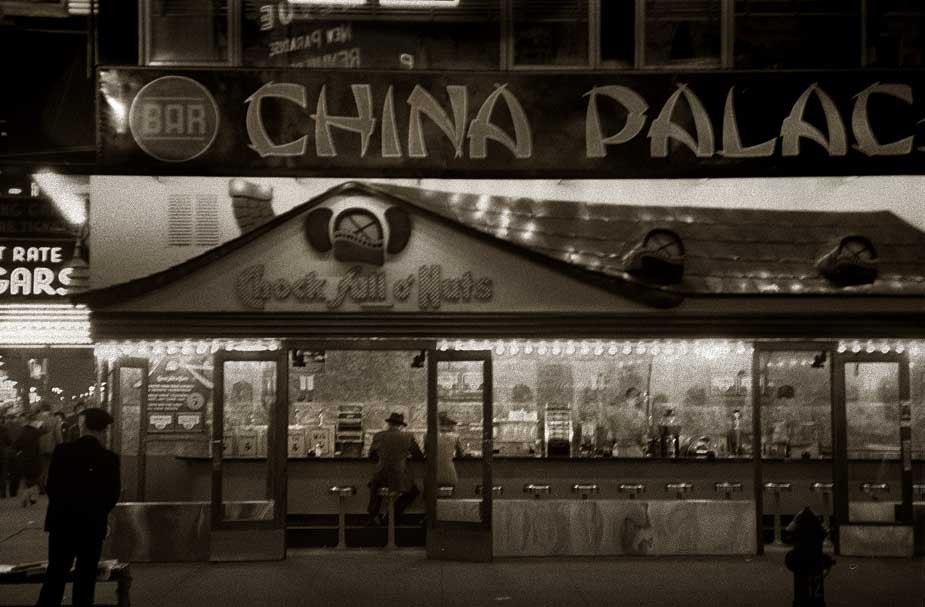
Detail: “Chock Full o’ Nuts at Night”: Laural J. Jones, American: 2004 digital scan taken from ca. 1938-1945 black and white film negative: This nighttime view believed to have been taken in Brooklyn Heights shows the popular post-Depression coffee shop with the large China Palace restaurant behind it. The coffee brand still marketed today featured shops selling a cup of coffee and sandwich for only a nickel. (at the time, there were 18 shops around New York) A police officer looks on at foreground left while a gentleman wearing his hat can be seen seated along a row of stools through the open doorway of the establishment at center. Courtesy: Private Florida Collection
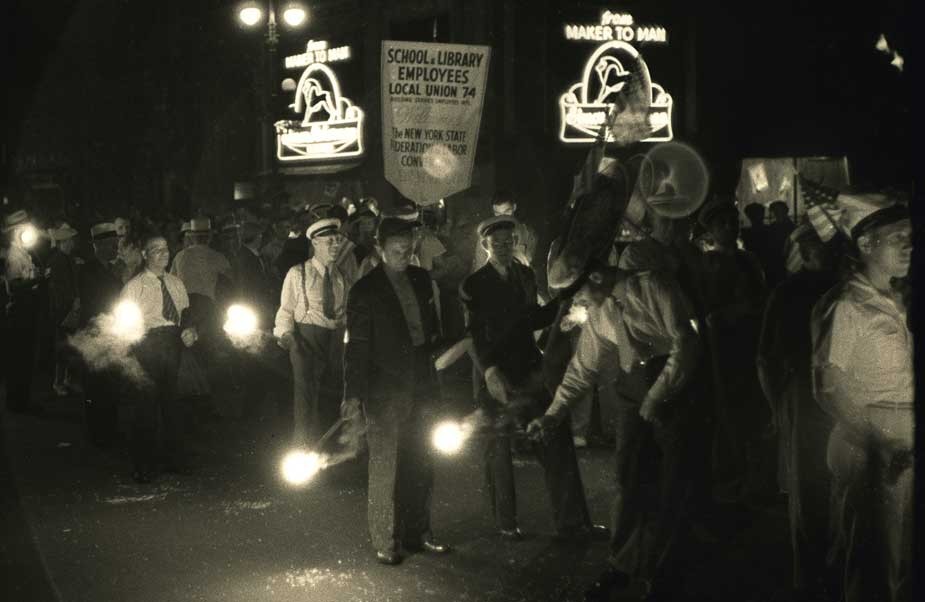
Detail: “Union Rally at Night”: Laural J. Jones, American: 2004 digital scan taken from ca. 1938-1945 black and white film negative: Holding flares and American flags, a nighttime rally of custodians employed by New York City custodians, members of School & Library Employees Local Union 74, takes place at an unknown New York City location. Courtesy: Private Florida Collection
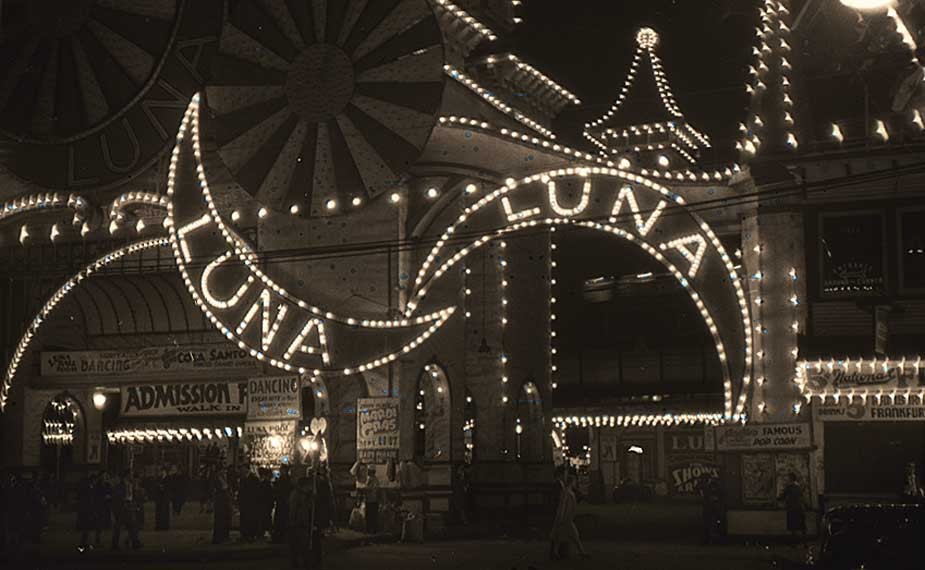
Detail: “Entrance to Luna Park, Coney Island at Night”: Laural J. Jones, American: 2004 digital scan taken from ca. 1938-1945 black and white film negative: Luna Park was an amusement park in Coney Island, Brooklyn, in New York City that first opened in 1903 and was destroyed by fire in 1944. It finally closed in 1946 after a second fire. Courtesy: Private Florida Collection

Taking advantage of city life, while using the Leica 35mm rangefinder to record night scenes a speciality, Laural Jones documented a fascinating and important record of Manhattan and the outer boroughs from the late 1930’s and into the 1940’s, with some of the larger events unfolding before his camera spanning the later years of the American Depression and leading through to the re-ordering of a new world order brought on by World War II. Sadly, the story of preservation as it relates to someones creative and personal artistic endeavors is one consistent with people’s indifference to memories and Photography’s evolving history. But survivors like Laural Jones do show up, thankfully, and in these nine digital offerings, I think you will find plenty to be fascinated with and hopefully inspired by.

David Spencer-
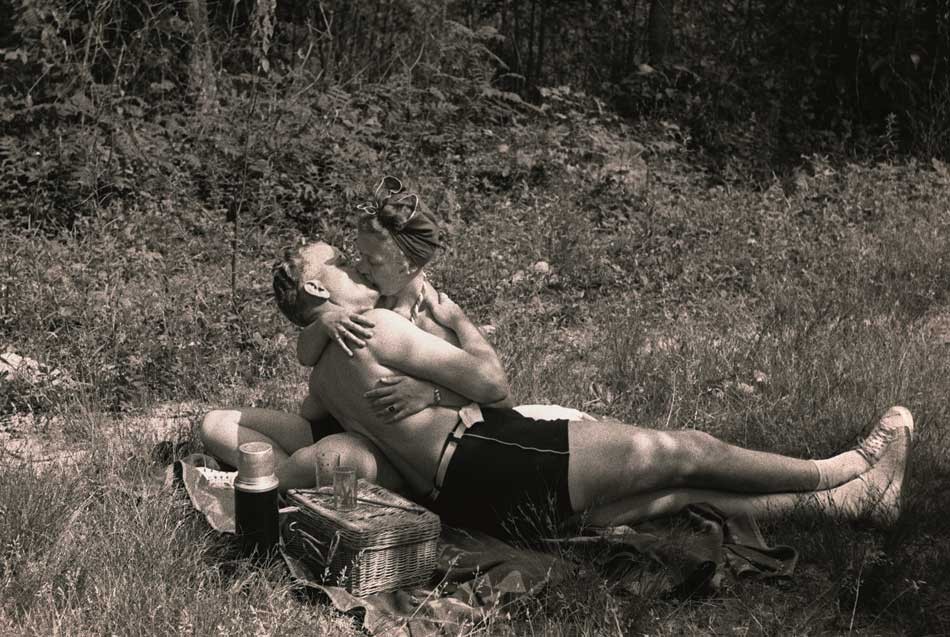
Detail: “Picnic Kiss”: Laural J. Jones, American: 2004 digital scan taken from ca. 1938-1945 black and white film negative. Laying on a blanket shirtless, and with a picnic hamper and two glasses balancing on top at left, the photographer Laural Jones kisses a woman that may be his future spouse Edith at an unknown location. This woman appears in many surviving negatives taken by the photographer, including one of her on the Asbury Park boardwalk at the top of this post. Courtesy: Private Florida Collection
SpringSprung

Apr 2016 | Alternate Processes, Color Photography, Fashion Photography, New Additions, Unknown Photographers

The Northern Hemisphere has once again thankfully undergone rebirth, becoming the season of spring and with it,  all the hope it represents for the continuation of our natural and human worlds.

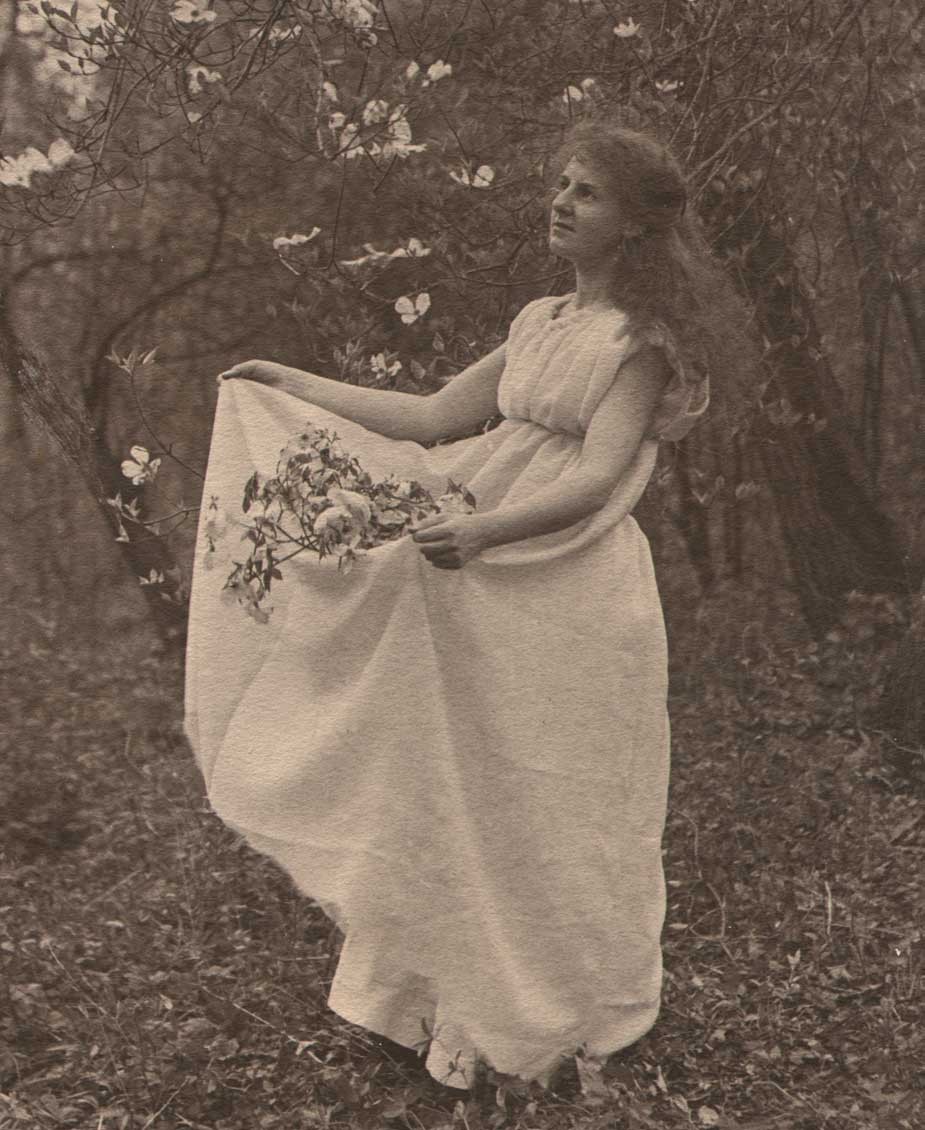
Detail: “Curtis High School Girl Gathering Dogwood Boughs”: Charles Rollins Tucker: American: platinum: ca. 1910-15: 19.7 x 13.1 | 30.5 x 23.3 cm: A genre landscape study celebrating both spring and womanhood, the model is perhaps a thespian known to have attended Curtis High School on Staten Island in New York City, where photographer C.R. Tucker taught Physics at the time. From: PhotoSeed Archive

Photographically, with the exceptions of those open-minded enough to embrace the obvious-something Alfred Stieglitz seized upon in 1893 when winter proved more than suitable for subject matter- the majority of amateurs a bit later at the turn of the 20th century seemed interested in dusting off their cameras only when those first buds and flowers of the season awoke once more.

This abbreviated compilation of images spanning the 1890’s through about 1940 from the PhotoSeed Archive-no matter how dated they may appear from the mores of days long gone by- is a reaffirmation dedicated to you that spring’s beauty and potential might give us all a bit of hope towards the future betterment of our often fragmented, present-day world.     David Spencer-  April, 2016

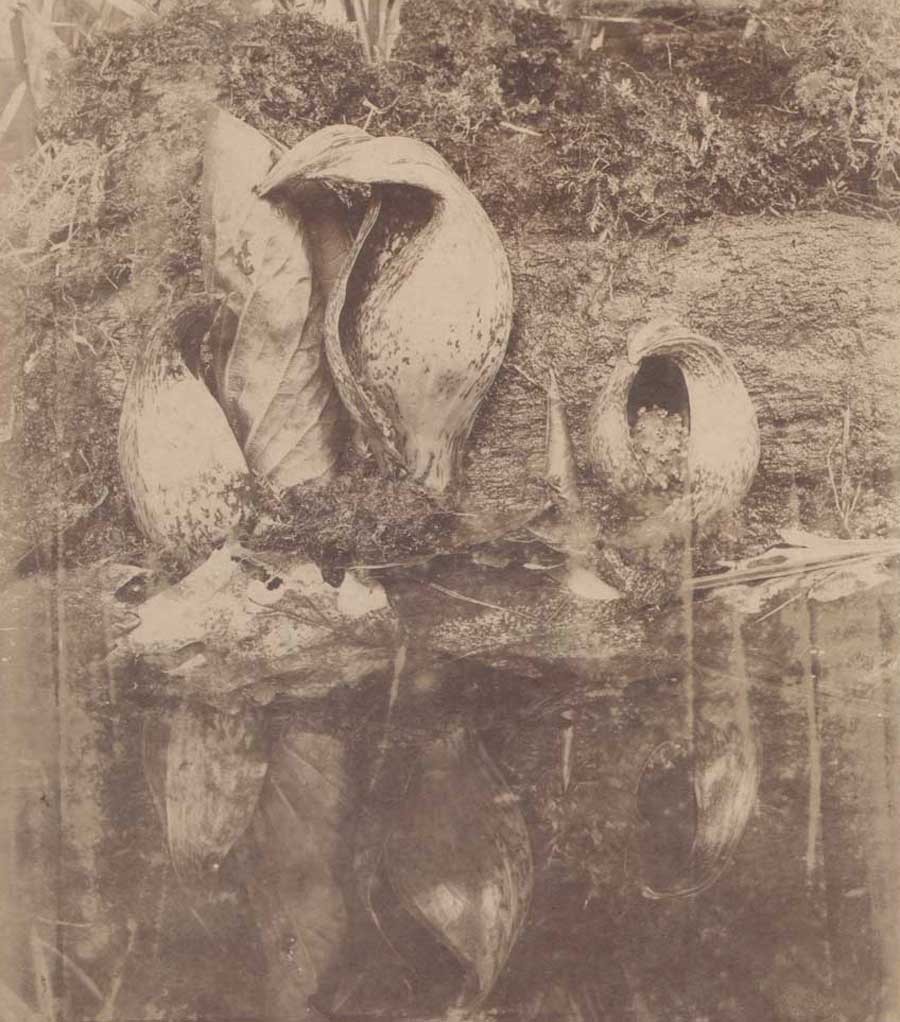
Detail: “Harbingers of Spring”: Louise Birt Baynes: American: gelatin silver: 1904: 20.8 x 15.5 | 35.6 x 27.9 cm: This study of skunk cabbage growing in the spring time may have been taken using an artificial light source. Author Frank Roy Fraprie mentioned the work in his article on photographing wild flowers for the March, 1904 issue of Boston’s Photo-Era magazine: “The plant must be photographed in its surroundings, for it has no stem or leaves at this season, to make possible a graceful arrangement at home, even if one were inclined to extend it hospitality. Mrs. Baynes has conquered all these difficulties, and her picture, “Harbingers of Spring,” is interesting to both the naturalist and the artistic photographer, – to one for its fidelity and to the other for its good composition.” From: PhotoSeed Archive

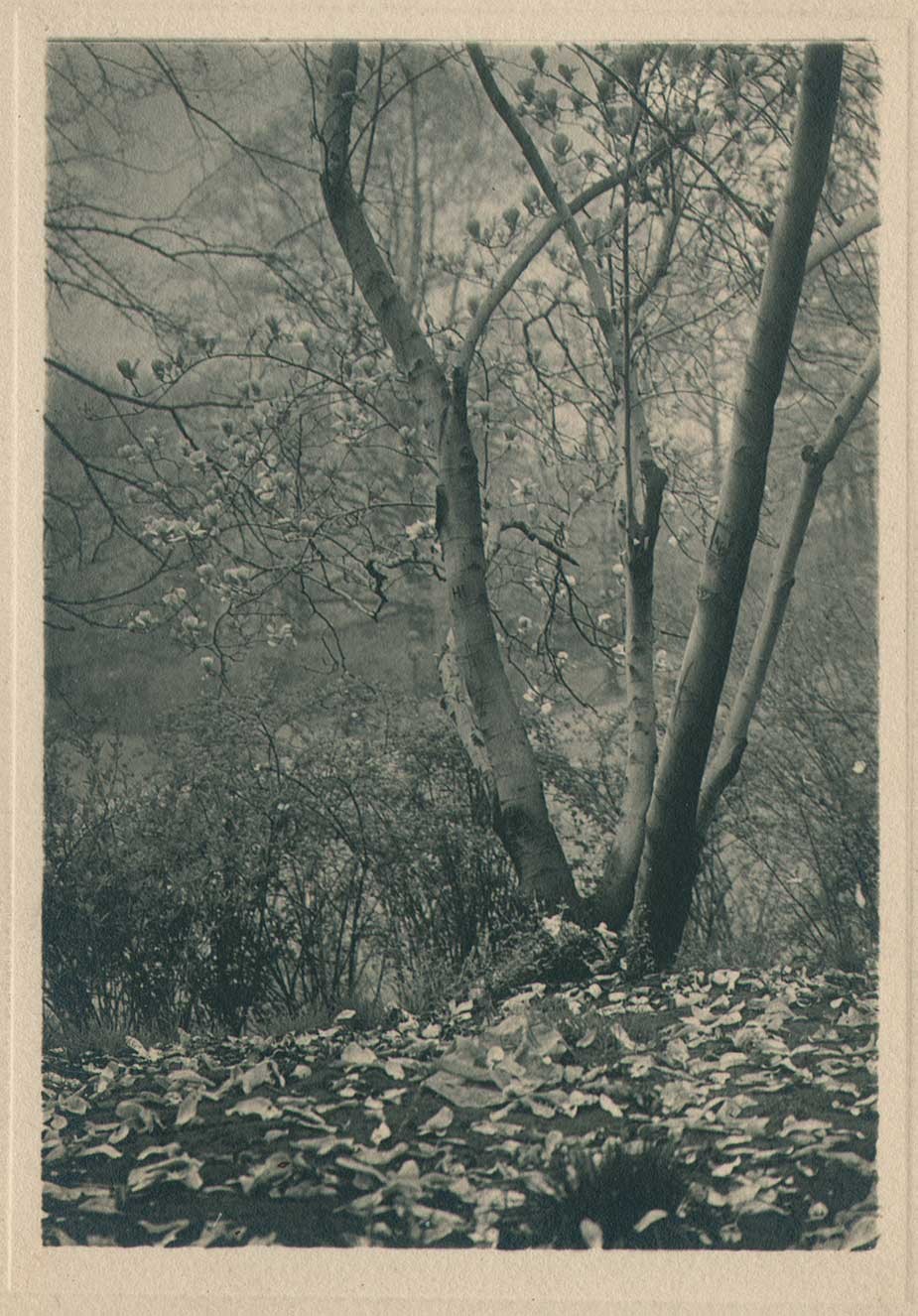
“Spring Vista with Fallen Leaves”: by Unknown Brooklyn (photographer) : American: carbon?: ca. 1905-10: 11.9 x 8.2 | 17.8 x 12.1 cm: What are believed to be Magnolia tree blossoms litter the ground in the foreground of this spring landscape study featuring a blooming Magnolia in the background, with the setting believed to be Brooklyn’s Prospect Park as many known examples of this location were taken by this photographer. This photograph, with title supplied by this archive, is by an Unknown Brooklyn amateur photographer whose surviving work was discovered in a trunk in the American South. Background can be found by searching for this site’s 2015 blog post: “No Junk in Trunk”. From: PhotoSeed Archive

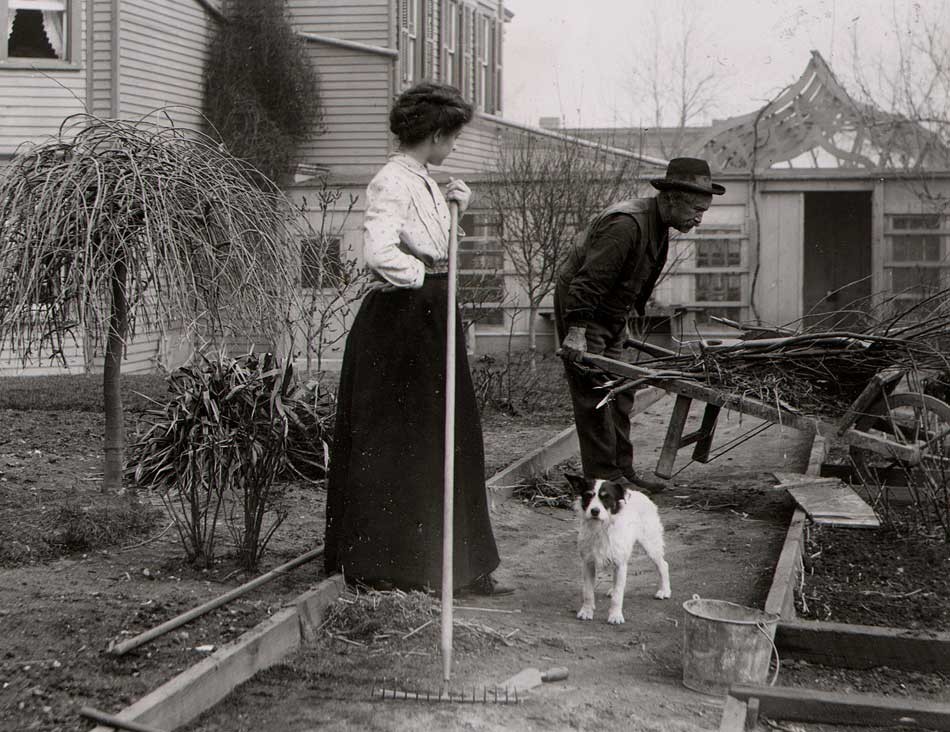
Detail: “Cleaning up the Yard in Spring”: c. 1900-05 by Jeanette Bernard: American, born Germany: (1855-1941) gelatin silver print c. 1935-40 from original glass plate negative acquired by Culver Service : 15.4 x 13.9 cm: alternate title: “Woman and Man Gardening”-George Eastman House NEG: 40724: 83:2640:0025: A spring cleaning study in a garden shows the photographer’s daughter with pet terrier dog at her feet watching as a gentleman (perhaps a hired man) prepares to move a collection of dead branches using a wheelbarrow. From: PhotoSeed Archive
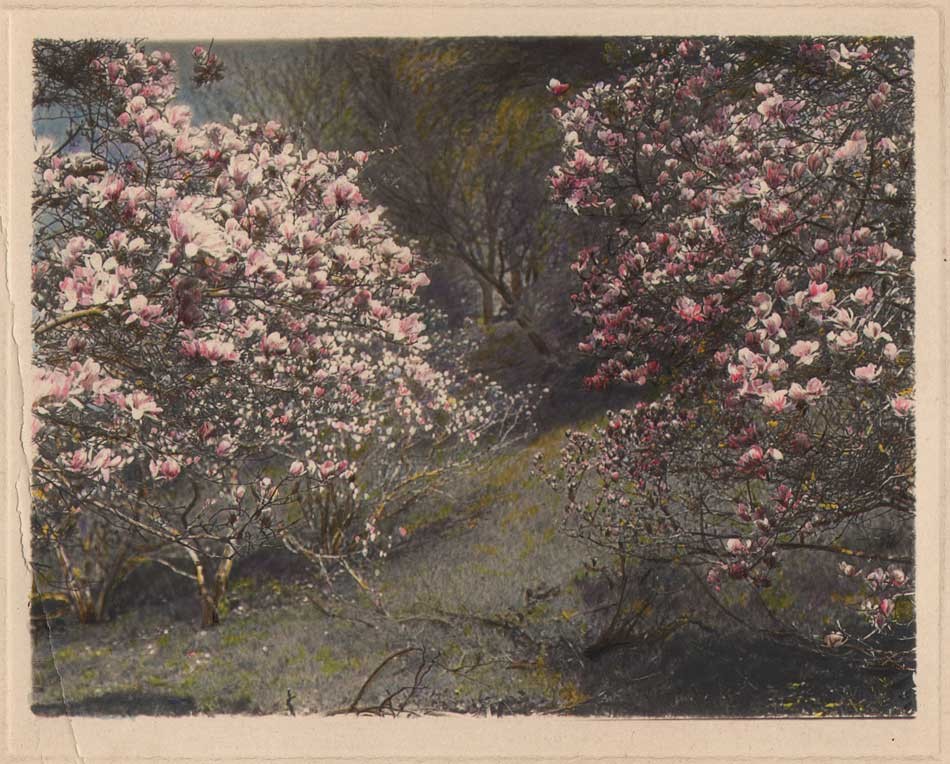
“Magnolia Trees Blooming in Spring”: by Unknown Brooklyn (photographer) : American: gelatin silver (hand-colored) from copy print: ca. 1910-15: 9.0 x 11.6 | 12.4 x 16.4 cm: This hand-colored landscape study showing several blooming Magnolia trees is believed to have been taken at Brooklyn’s Prospect Park as many known examples of this location were taken by this photographer. This photograph, with title supplied by this archive, is by an Unknown Brooklyn amateur photographer whose surviving work was discovered in a trunk in the American South. Background can be found by searching for this site’s 2015 blog post: “No Junk in Trunk”. From: PhotoSeed Archive

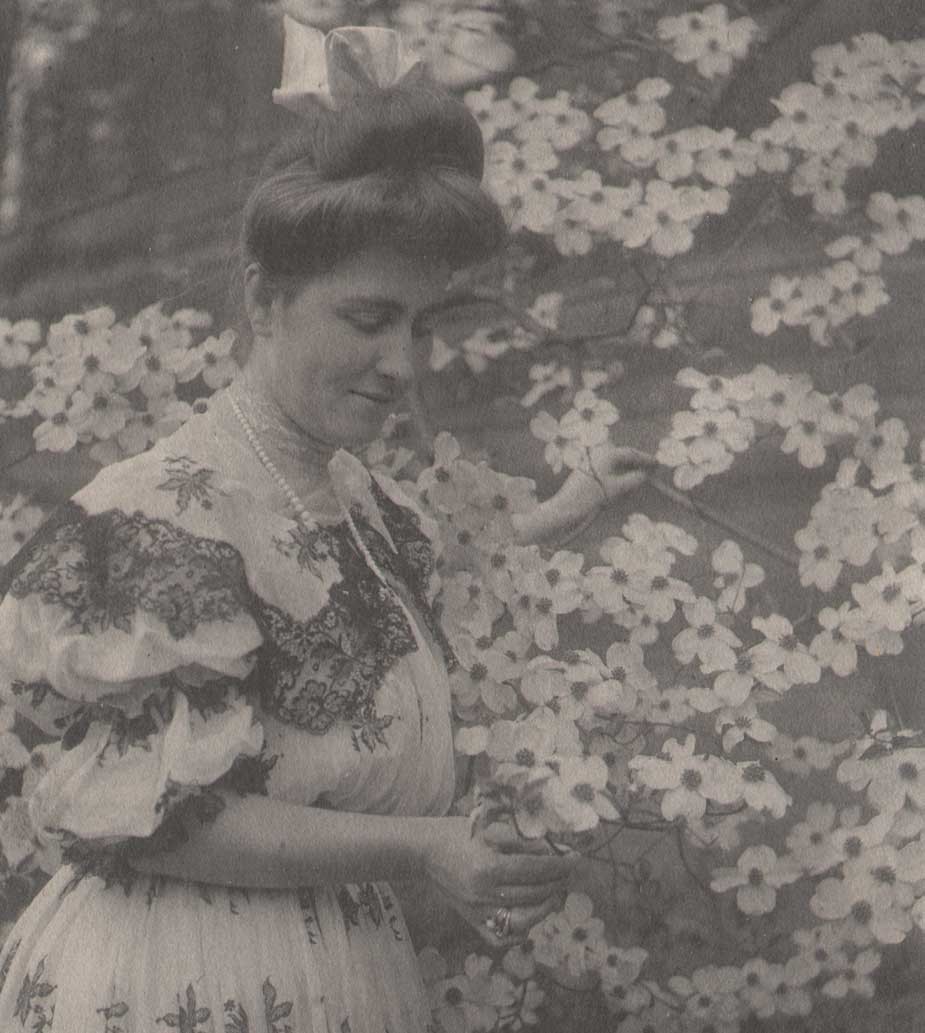
Detail: “Clare Shipman with Dogwood Blossoms”: C.M. Shipman: American: platinum: 1904 or before: 17.5 x 11.8 cm | 27.9 x 36.0 cm tipped to black art-paper leaf from album: Born ca. 1880, Clare Cressey Shipman, spouse of amateur photographer Charles Melville Shipman, (1874-1947) examines a cluster of dogwood blossoms, most likely taken in the borough of Richmond on Staten Island, New York City, where the couple lived at the time. The photograph was included with other mostly naturalistic studies compiled in an album by the photographer with the final photograph signed and dated 1904. From: PhotoSeed Archive

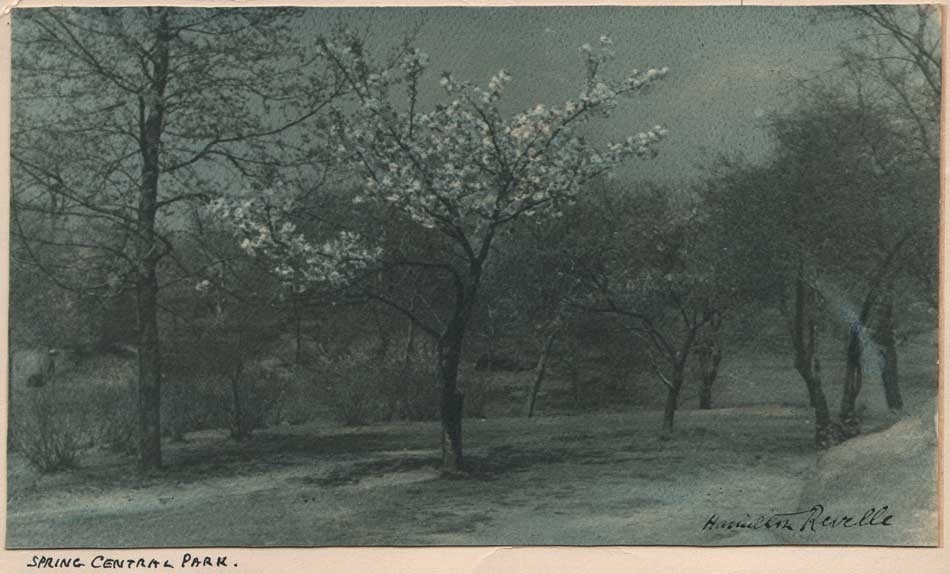
“Spring Central Park”: Hamilton Revelle, (1872-1958) English, born Gibraltar: bromoil (hand-colored) ca. 1930-40: 10.2 x 18.5 | 14.3 x 22.4 cm: This delicate hand-colored, blue hued study of a blooming tree in springtime in New York City’s Central Park was probably done in the early 1930’s along with another landscape study shown with this post. A British born stage and screen actor and consummate amateur photography on the side, he later specialized in the bromoil-transfer process after mastering other processes. The Broadway Photographs website includes a short bio: “Revelle’s intense interest in photography perhaps derived from the art’s capacity to arrest beauty in timeless perfection. He began carrying his camera equipment with him everywhere and spent his days, before going to the theater in early evening, perfecting his technical mastery of the medium, in platinum, silver, and autochrome. He was an avid experimenter with various printing papers and popularized the print of works on parchment. His portraits were displayed in international salons regularly during the first decade of the 20th century. The Royal Photographic Society of London awarded him its gold medal for excellence in portraiture.” From: PhotoSeed Archive

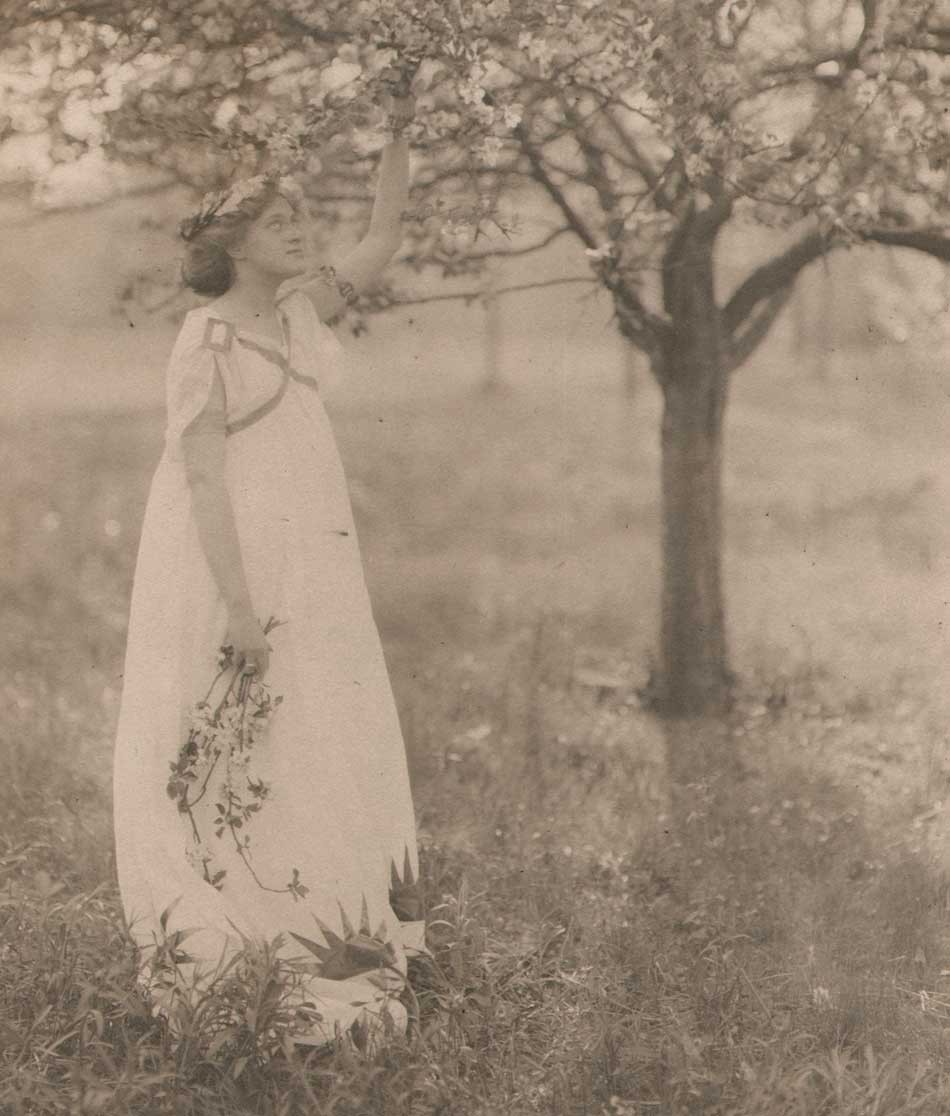
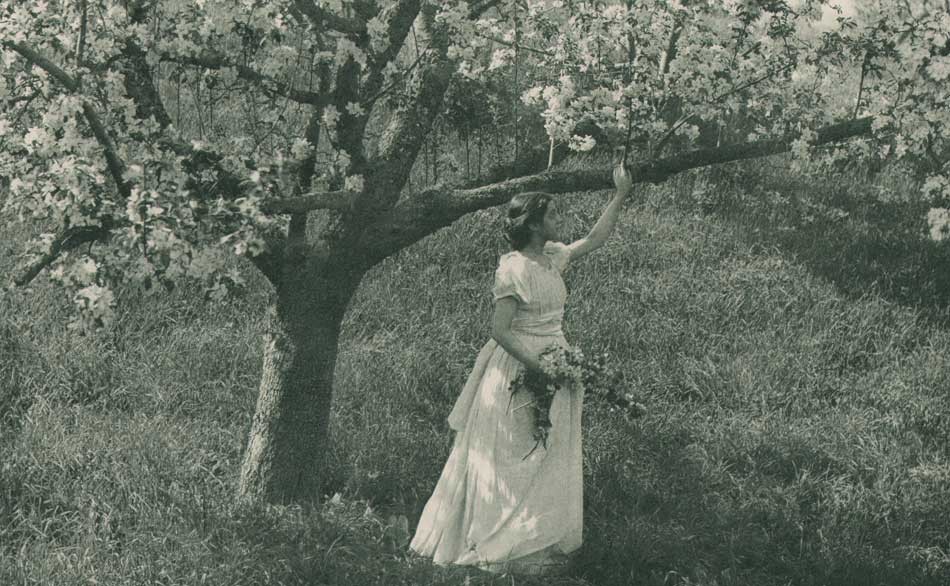
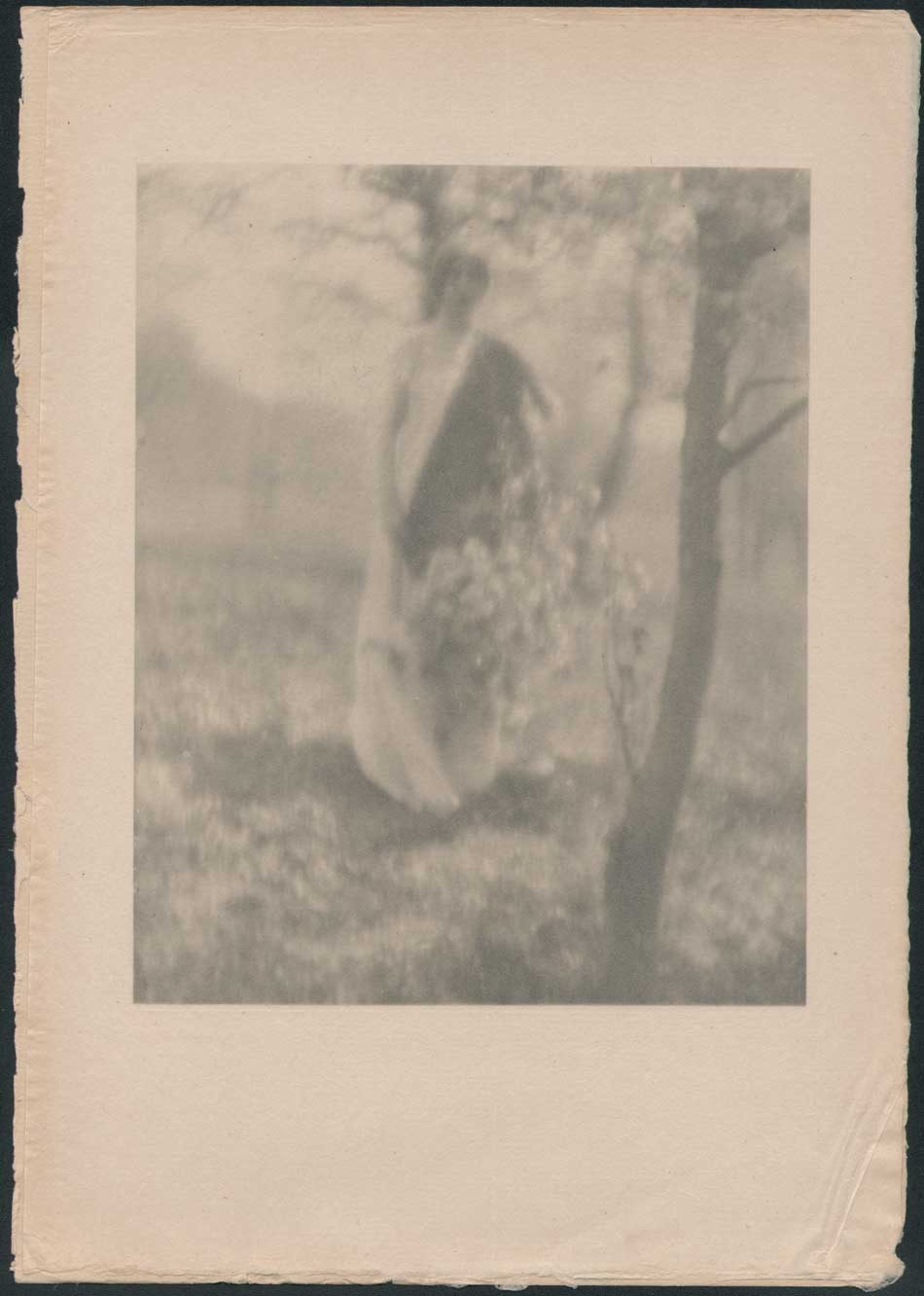
Detail: “Apple Blossoms”: Charles Rollins Tucker: American: platinum: ca. 1905-10: 20.3 x 14.7 | 32.7 x 25.5 cm: A genre landscape study celebrating both spring and womanhood, (notice the sunbursts at the bottom of her dress) the model is perhaps a thespian who most likely attended Curtis High School on Staten Island in New York City, where photographer C.R. Tucker taught Physics at the time. From: PhotoSeed Archive

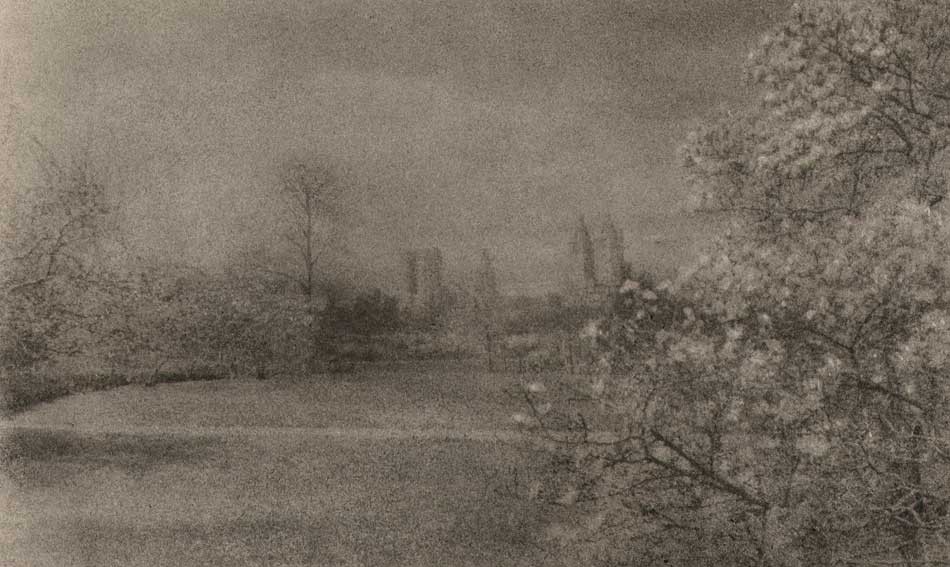
“Central Park Spring with Eldorado”: Hamilton Revelle, (1872-1958) English, born Gibraltar: bromoil: ca. 1935-40: 11.5 x 18.5 | 17.6 x 27.8 cm: This bromoil landscape study taken in New York City’s Central Park includes a few hints of the Manhattan skyline, including the luxury twin-spired Eldorado apartment building opened in 1931, seen just to the left of the blooming tree on the right side of frame. A British born stage and screen actor and consummate amateur photographer, Revelle later specialized in the bromoil-transfer process after mastering other photographic processes. From: PhotoSeed Archive

Detail: “Apple Blossoms”: Emma Justine Farsworth, American: hand-pulled photogravure published in periodical “Sun & Shade” New York: June, 1893: whole #58: N.Y. Photogravure Co.: 17.0 x 21.7 cm | 27.5 x 34.7 cm: From: PhotoSeed Archive

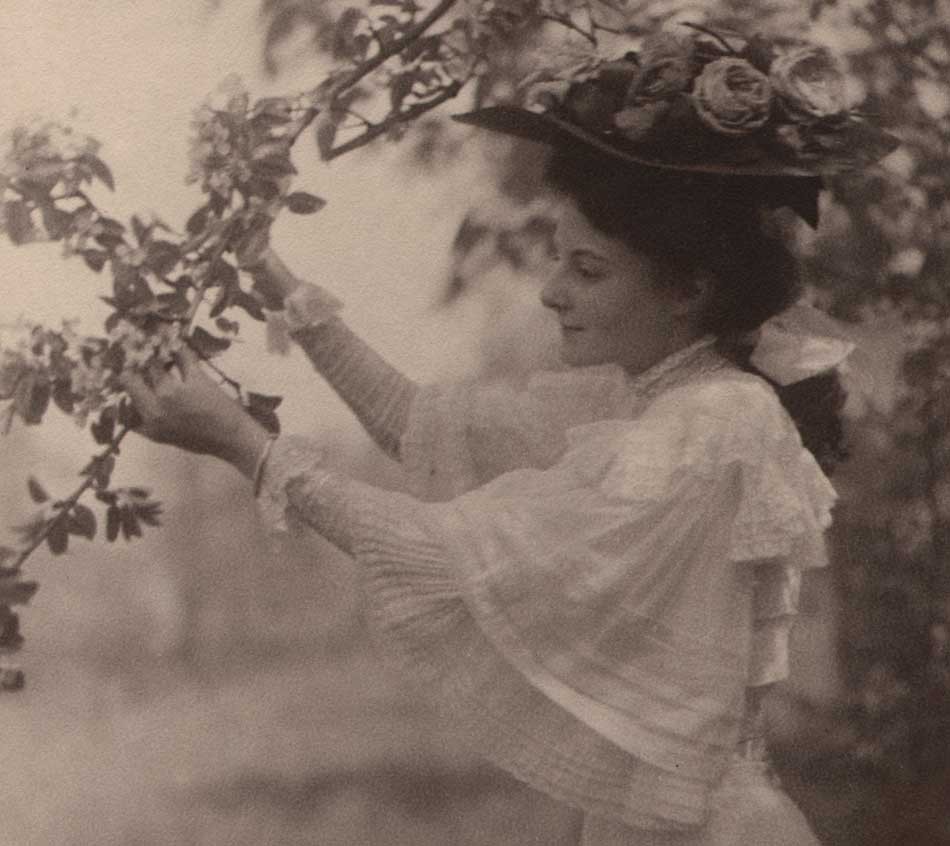
Detail: “Mary Tucker with Apple Blossoms”: Charles Rollins Tucker: American: platinum: ca. 1905-10: 26.1 x 19.2 | 30.0 x 22.0 cm: Mary (Carruthers) Tucker, (1870-1940) spouse of amateur photographer C.R. Tucker, holds a bough of blossoms from an apple tree while wearing a hat adorned with flowers in this classic genre study celebrating womanhood in early spring. From: PhotoSeed Archive

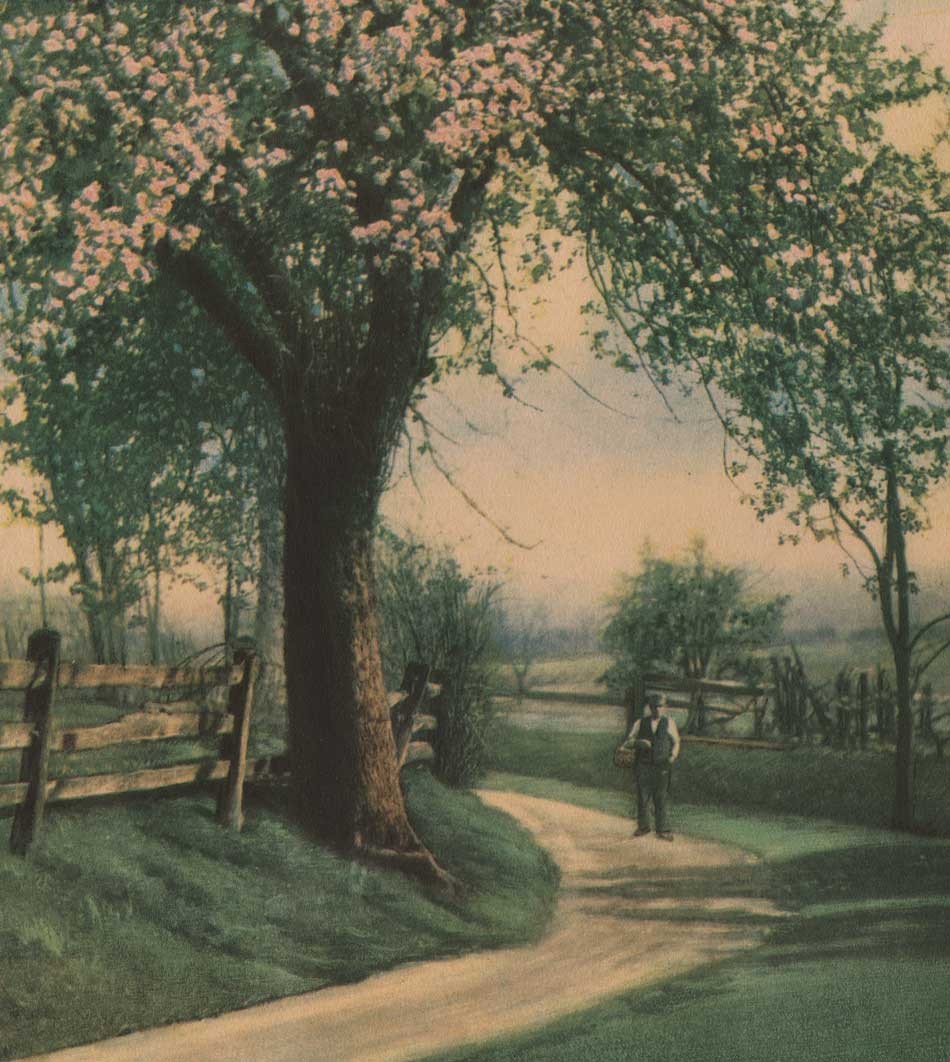
Detail: “In Apple Blossom Time”: Henry Troth: American: lithograph, four-color: ca. 1915: 24.7 x 20.3: paperboard mount remnants with following additional details: Negative by Henry Troth; Artist Proof Fac-Simile; Published by the Henry Heininger Co NY.: This landscape study of a gentleman holding a basket in a roadway by Henry Troth shows a large flowering apple tree in the foreground. The Heininger firm, founded in 1885, marketed art reproductions and published postcards in addition to larger works like this. Metropostcard.com states this firm’s “Fac-Simile Hand painted Nature Views were of course not hand colored but reproduced hand colored work in four color lithography through the use of paper grains. These cards also have a false plate mark.” Another reference included in the publishing trade journal Geyer’s Stationer from 1915 when this work is believed to have been produced stated: “The Heininger Co. are famed as well for their extensive line of artist proof facsimile nature pictures so perfectly executed that they readily pass for the high-priced hand-colored photoprints that command such generous prices on the market. The popular prices at which these art subjects are offered should command the instant attention of buyers, who already know the good value of their Abelart line, a complete display of which will be on view.” Another Troth spring landscape, “The Hill Road” also appeared in 1915 produced by this firm. From: PhotoSeed Archive

“Spring”: George H. Seeley, American: hand-pulled Japan-paper tissue photogravure by the Manhattan Photogravure Co. included with Camera Work issue XXIX, January 1910: 19.7 x 15.8 | 29.7 x 20.6 cm | 30.0 x 21.0 cm- Enfield 1887 watermarked laid paper mount: A review in the February 25, 1910 issue of The British Journal of Photography discusses the ten photogravure plates by Seeley included with CW 29, and singles out this spring study with female model at the critique’s conclusion: “Of the plates, the ten photogravures after photographs, by George H. Seeley, are remarkably rich examples of that idle sort of decorative toying with photography which “Camera Work” has always fostered. Mr. Seeley’s technical powers are very considerable. He is master enough to take great liberties with focussing, and does so with impunity; but the greatest enthusiast in art for art’s sake must admit that the subject-matter of Mr. Seeley’s work is trivial and tiresome. “Girl with Bowl” is well designed and of exquisite quality. “Autumn” introduces a tambourine and bulrushes, with an inexplicable pose of the model. “The White Screen” shows the lady out of doors, dappled with the shadow from a tree. This is a charming study in tones. Next follow two subjects introducing an artist’s palette—the first ridiculous and the next mystifying. Then comes a male nude of no attractions. “White Trees” and “Spring,” by their lightness and delicacy of tones, and the beauty of their suggestion, are, in our opinion, the best pictures of all. In the last two, the photographer’s title resources give out, and he contents himself with calling them No. 347 and No. 356. They do not suffer thereby. No. 356 is truly decorative, and shows us that Mr. Seeley has imbibed good ideas from the classics in painting.”(p. 147: there is confusion as to the above numbers: a flysheet includes the pagination as plates VII (White Trees.) & VIII (Spring.): From: PhotoSeed Archive

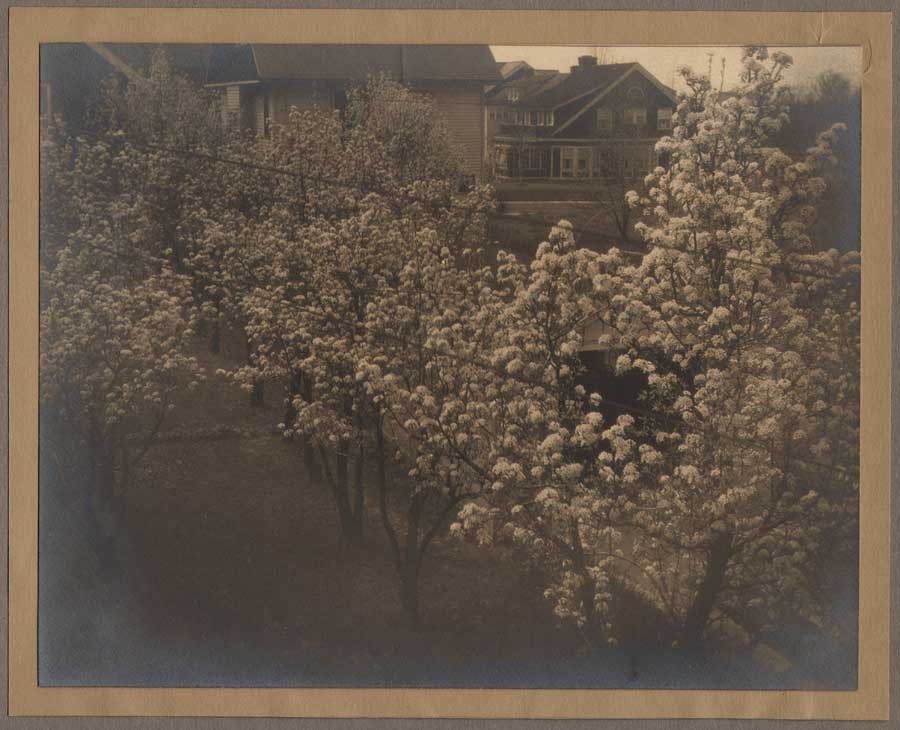
“Backyard Apple Trees Blossoming”: Leo Kraft, (1885-1927) American: gelatin silver print, ca. 1915-20: 19.0 24.3 | 21.0 26.1 | 33.0 x 39.3 cm. This photograph most likely picture’s the backyard area of the photographer’s Lakewood, Ohio home outside Cleveland showing a double-line of flowering apple or crabapple trees. The print is believed to be printed on Kodak’s P. M. C. Bromide (double weight) paper like other known examples by Kraft in this archive.: From: PhotoSeed Archive

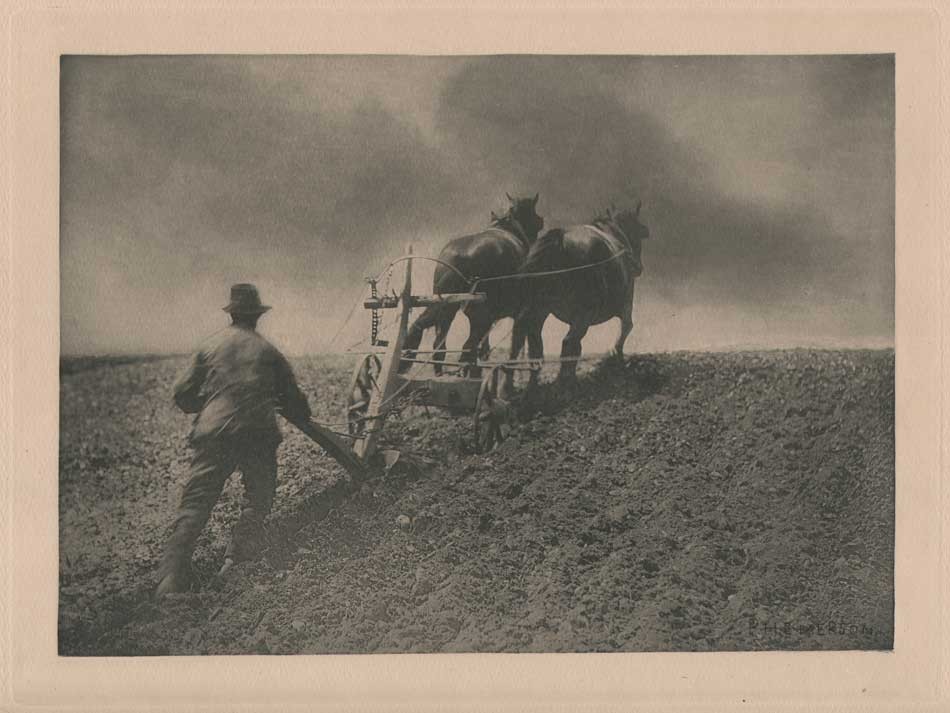
“A Stiff Pull”: Peter Henry Emerson: British, born Cuba: hand-pulled photogravure by the photographer included in his limited, second-edition portfolio “Pictures of East Anglian Life”: 1890: 20.7 x 28.8 | 34.1 x 42.6 cm: A farmer guides a plow behind a team of two horses as he tills the earth in the English spring countryside. England’s Victoria & Albert Museum notes of this work included with this portfolio: “In 1889 Emerson published his controversial book ‘Naturalistic Photography for Students of the Art’ without images. ‘Naturalistic Photography’ examined his purist approach to photography, derived from his fascination with Naturalism in art, and attacked the prevailing artificial aesthetic in art photography. After its publication Emerson felt that his opponents had misunderstood his ideas. So, in 1890 he selected 10 plates from his book ‘Pictures of East Anglian Life’ (1888) that best illustrated his theories, and presented them loose in a portfolio dedicated to the ‘photographic student’, with the same title and cover of the book. He then donated copies of this portfolio to every photographic society in the country.” Included in the work as plate III, “A Stiff Pull” is also reproduced as a line engraving on the oversized canvas board folio, but with the odd inclusion of the ocean with sailboats and gulls flying overhead on the horizon. From: PhotoSeed Archive

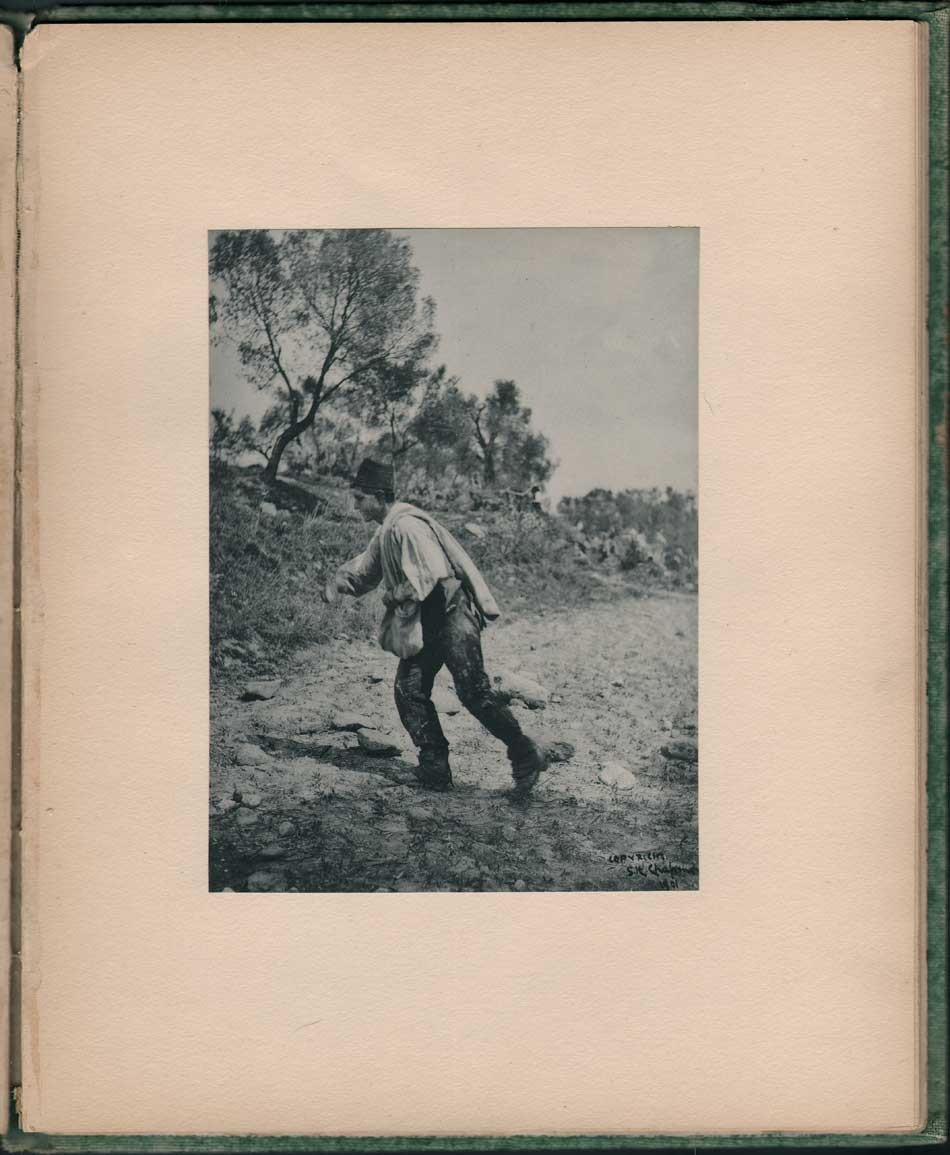
“Some fell upon Stony Places,…”: Samuel Hudson Chapman, American (1857-1931): platinum print included in his self-published volume: “The Parable of the Sower, Illustrated From Life, With The Series of Pictures Awarded The Allison Silver Cup of the Photographic Society of Philadelphia For the Year 1900: S.H. & H. Chapman 1348 Pine Street, 1901: 18.8 x 13.9 corner-glued | 31.5 x 25.4 cm: A dealer in rare coins along with his brother Henry, Philadelphia resident Samuel Hudson Chapman was also an accomplished photographer and president of the Photographic Society of Philadelphia at the time he published this volume which included this photograph in 1901. Showing a farmhand sowing seeds in the springtime, most likely done in the Italian countryside, the following copy accompanies the work opposite, from the King James Version of the Bible’s Book of Matthew: “Some fell upon Stony Places, where they had not much earth: and forthwith they sprung up, because they had no deepness of earth; and when the sun was up, they were scorched; and because they had no root, they withered away.” From: PhotoSeed Archive

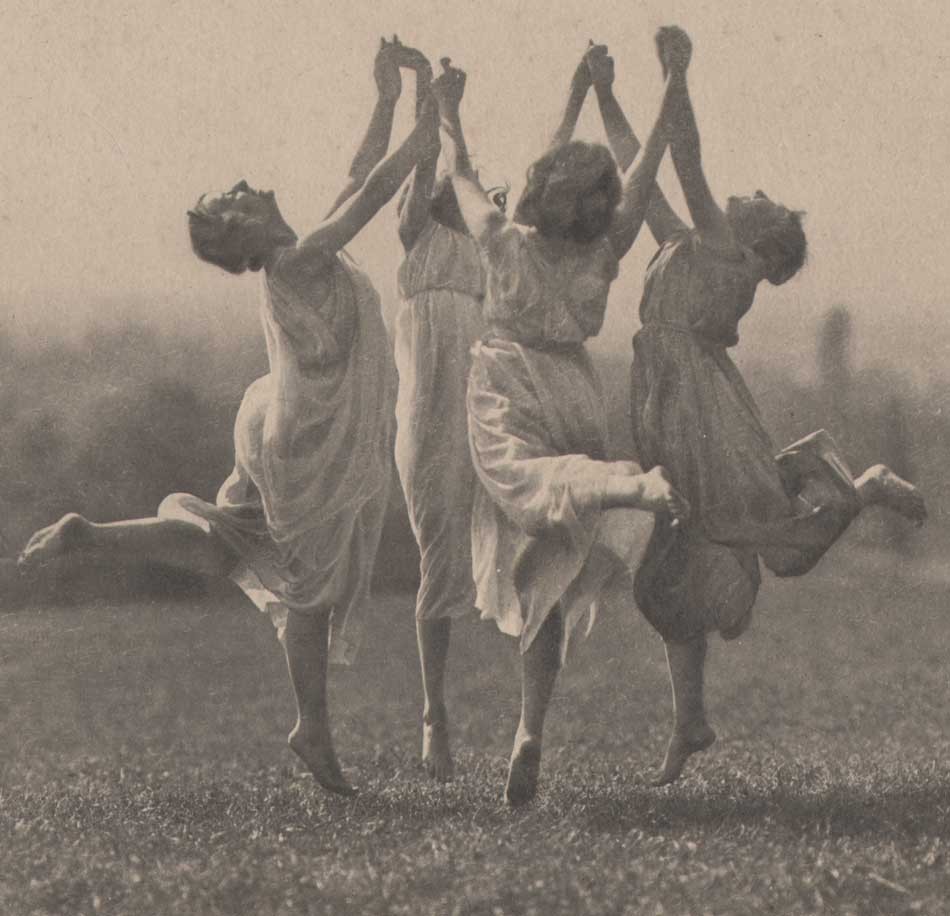
Detail: “Vers L’Idéal, Jeunes Filles Dansant : “Towards the Ideal, Young Girls Dancing” : Frederick Boissonnas, Swiss (1858-1946): hand-pulled photogravure by Munich’s Verlagsanstalt F. Bruckmann A.-G. : 1911: 21.2 x 29.2 | 26.3 x 36.6 cm: Suggestive of an exuberant ritual acknowledging rebirth in spring, this photographic study of four female dancers can be dated to around 1911, when it was titled Vers L’Ideal “Towards the Ideal” and exhibited as part of the London Salon of Photography, where it was shown cropped to the central figures. These dancers were students attending a school teaching the “Dalcroze Method” of music pedagogy in Hellerau, Germany, now part of Dresden. The school was founded in 1910 by the Swiss composer, musician and music educator Émile Jaques-Dalcroze. (1865-1950) From: PhotoSeed Archive

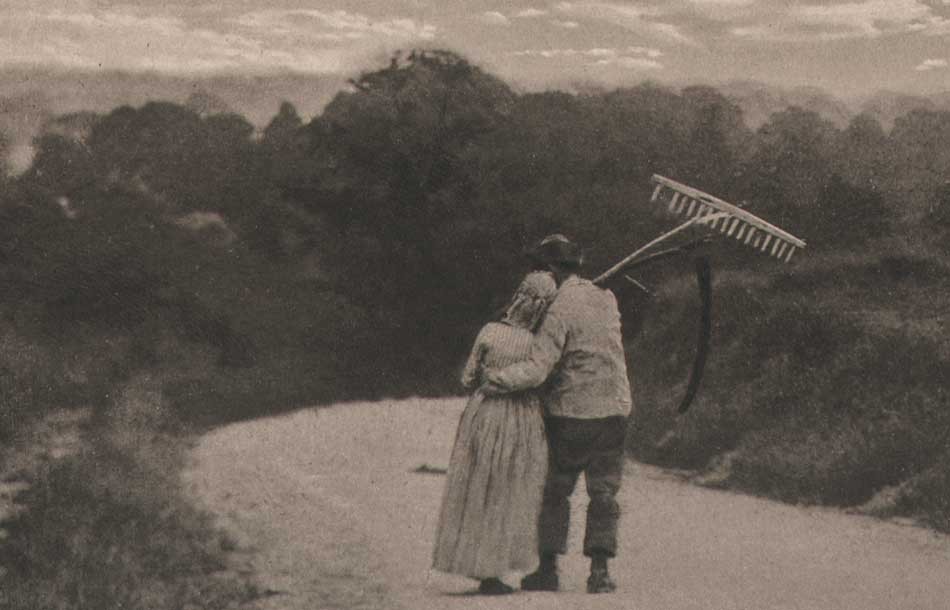
Detail: “Sweet Springtime” : Ralph Winwood-Robinson, English (1862-1942): hand-pulled, Chine-collé edition photogravure from limited-edition portfolio “Amateur-Kunst: 37 Photogravuren Nach Naturaufnahmen” (Amateur Art: 37 photo Engravings after nature Photographs) published by Richard Paulussen at Vienna’s Gesellschaft für Vervielfältigende Kunst: 1891: 20.6 x 26.8 | 35.6 x 48.2 cm: Titled “Sweet Springtime”, this romantic landscape genre study showing a couple walking together (please see this website for uncropped version) down a road past a windmill was taken by the son of renowned English photographer Henry Peach Robinson. It was exhibited in Vienna during the groundbreaking 1891 “Internationale Ausstellung Künstlerischer Photographien” (International Exhibition of Art Photographers) organized by the Club of Amateur Photographers in Austria (Club der Amateur Photographen in Wien) the same year.: From: PhotoSeed Archive

1 2 3