Featured Entries from the Photoseed Blog

Significant Photographs
19 Entries

Oh Say Can you See?

Jul 2014 | History of Photography, Scientific Photography, Significant Photographs

Walt Whitman certainly did. Just check out his eyeballs on this photograph taken in 1887 by George C. Cox for confirmation. Especially on this most personal of American holidays, the Fourth of July, the continuing birthday idea of our messy, evolving experiment of a democratic republic called the United States can never be said to be boring.
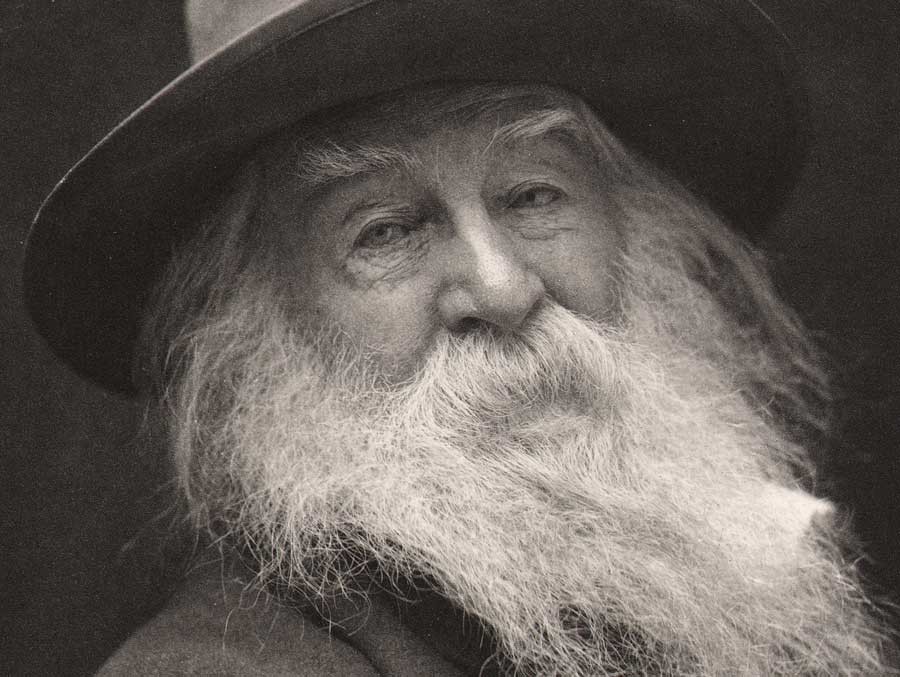
Detail: 1887: Walt Whitman-1819-1892 by George C. Cox: (portrait known as the “Laughing Philosopher”) 23.9 x 18.8 cm | 45.2 x 33.3 cm: vintage large format, hand-pulled photogravure printed circa 1905-10 by the Photographische Gesellschaft in Berlin on Van Gelder Zonen plate paper. From: PhotoSeed Archive

Need proof of his vision? – Whitman’s metaphorical call in this famous quote: “What is that you express in your eyes?” ; and response: “It seems to me more than all the print I have read in my life.”

You could say America’s poet (1819-1892) of the everyman didn’t need a camera, he was one. His genius of observation, something all great photographers possess, gave him the power to indelibly express his convictions. So when words flowed from his pen, they possessed the power of photographs, especially on the very idea of America in the aftermath of the Civil War:
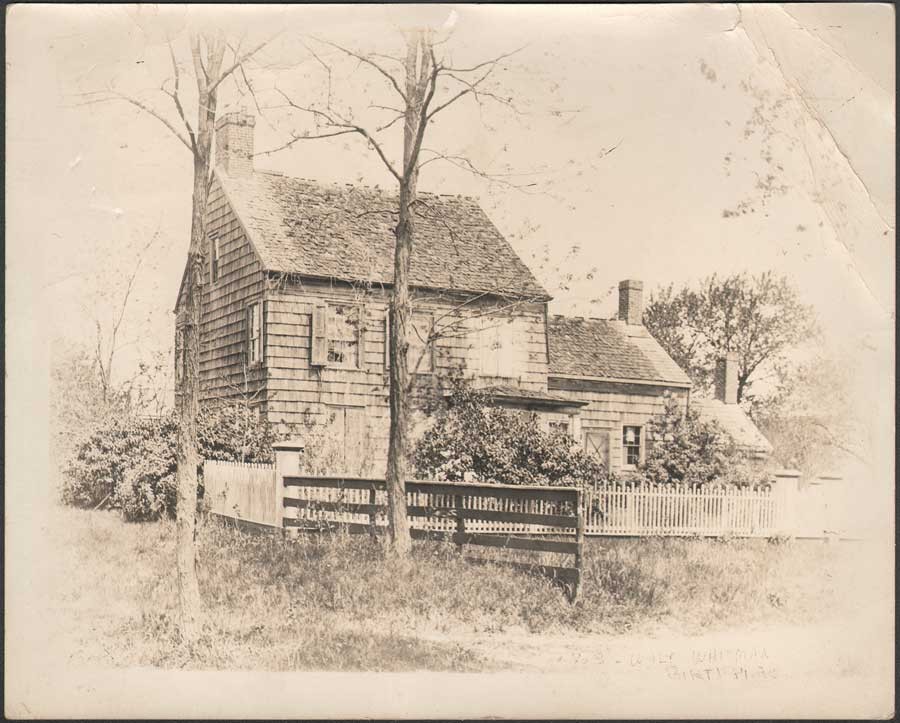
“Walt Whitman Birthplace in 1903” (South Huntington, New York): by Ben Conklin: 1903: vintage albumen print: 20.3 x 25.2 cm from: PhotoSeed Archive: (Benjamin Sargent Conklin: 1873-1964)

from Leaves of Grass: intro to “Thoughts“:

Of these years I sing,
How they pass and have pass’d through convuls’d pains, as
through parturitions,
How America illustrates birth, muscular youth, the promise, the
sure fulfilment, the absolute success, despite of people-
illustrates evil as well as good,
The vehement struggle so fierce for unity in one’s-self;
How many hold despairingly yet to the models departed, caste,
myths obedience, compulsion, and to infidelity, … (1.)
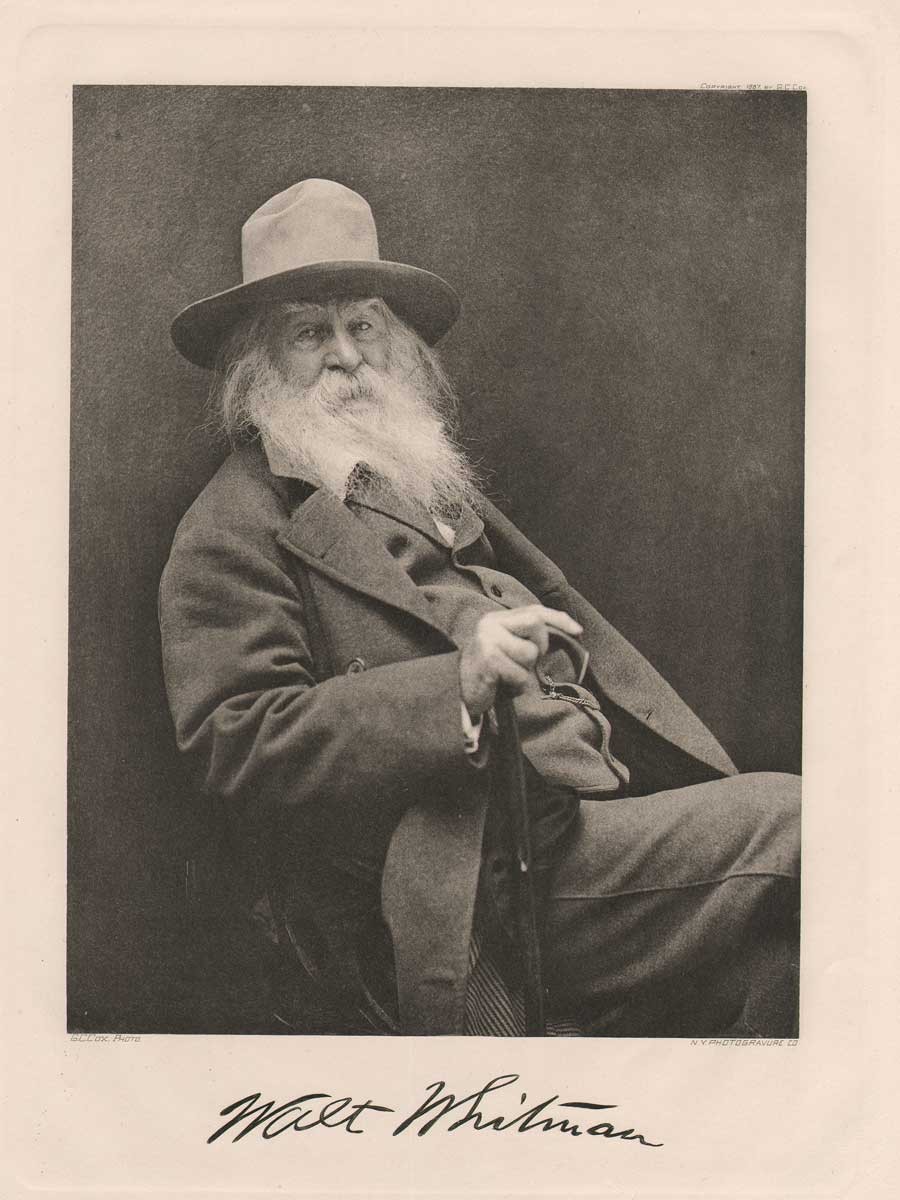
“Walt Whitman” by George C. Cox: 1887. Hand-pulled photogravure published in periodical “Sun & Shade” New York: March, 1892: whole #43: N.Y. Photogravure Co.: 21.5 x 16.7 cm | 34.7 x 27.4 cm: from: PhotoSeed Archive

But enough of the history lesson. Since most of us will never rise to the level of a Whitman in prose, photography as an art form is a comparably easy stretch. Speaking for myself as a young newspaper photographer in the mid 1980’s hunched over a light table editing film, an early mentor told me as long as a person’s eyes in the negative were tack sharp through the loupe, it was a “keeper”, and worthy of publication.

And so it was for my colleagues a century before my own light table revelation, but with the slow, fragile dry plates in use at the time a much greater technical challenge. In 1887, New York portrait photographer George Collins Cox (1851-1902) had the sitting of a lifetime in none other than Whitman. Strolling into his New York studio with oversized fedora, it was 22 years to the day no less on April 15th when American president Abraham Lincoln finally succumbed to an assassin’s bullet in 1865.
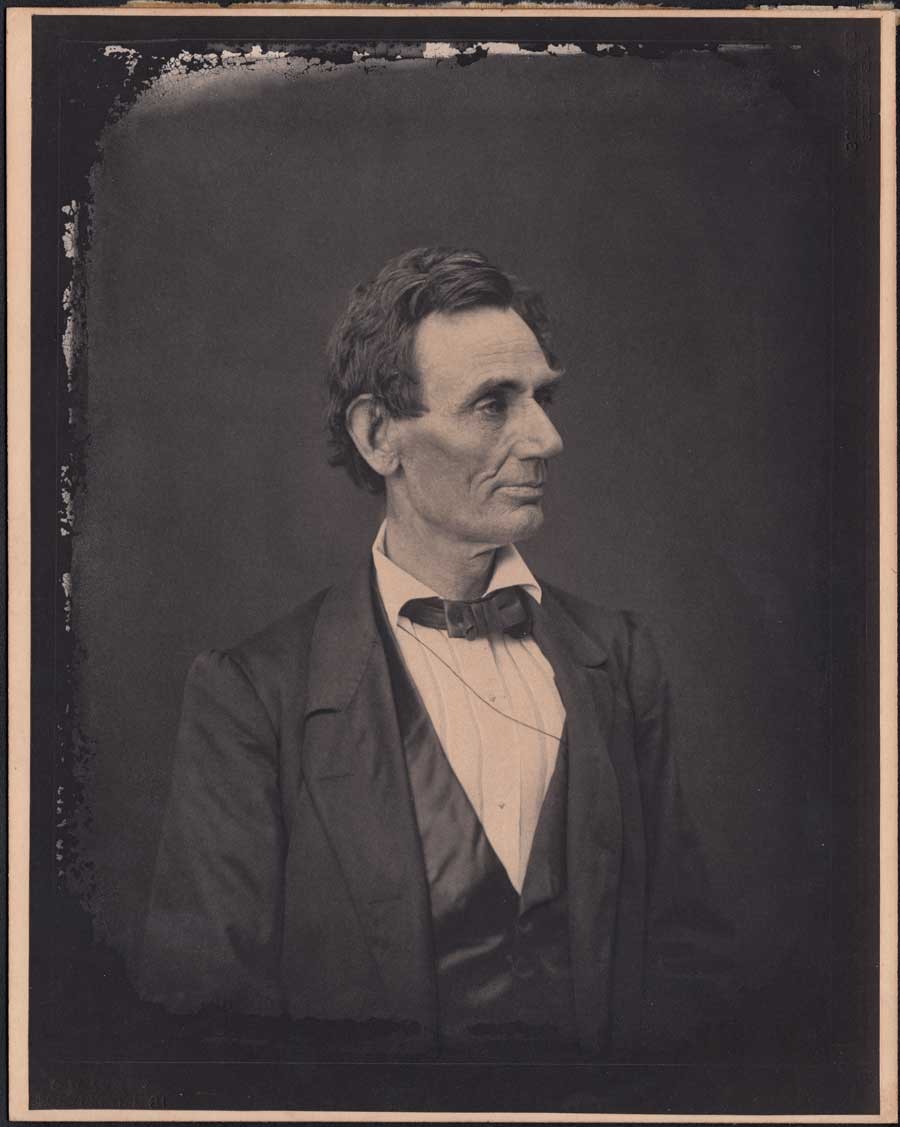
Abraham Lincoln by Alexander Hesler (1823-July 4th, 1895):taken in Springfield, Illinois on June 3, 1860: vintage platinum print © 1881 by George Bucher Ayres: print from late 1890’s: Meserve #26|Ostendorf #26″ One of the most famous Walt Whitman poems, “O Captain! My Captain!”, eulogizing the death of this American president, was written by Whitman in 1865: from: PhotoSeed Archive

And he nailed it, as they say in America. Eyes tack sharp. The following historical account of the Whitman portrait sitting from the Charles E. Feinberg Collection at the Library of Congress gives a nice working account of Cox the photographer in action. A result of that session: the “Laughing Philosopher“, was the title Whitman declared as his favorite:
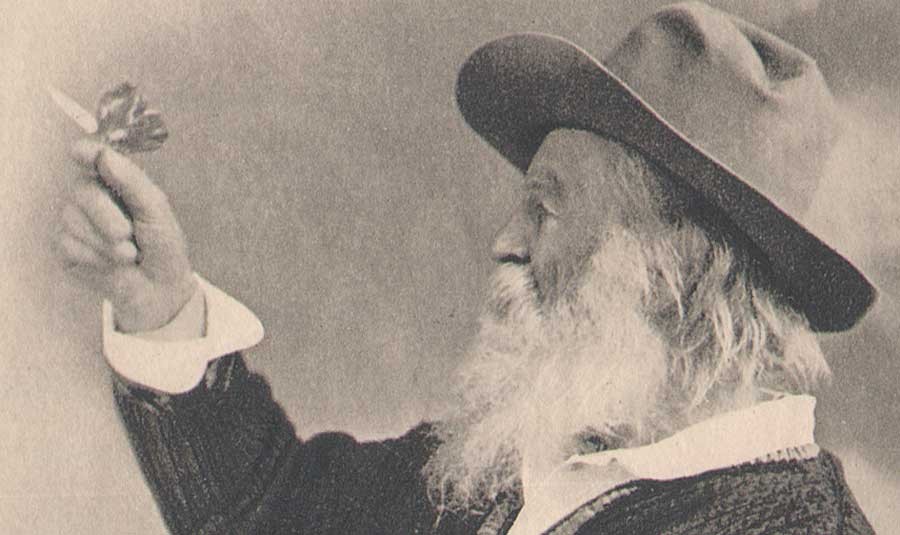
Detail: “Walt Whitman and the Butterfly” :1877(?):by W. Curtis Taylor of Broadbent & Taylor (Philadelphia): vintage hand-pulled vellum photogravure: 13.8 x 9.8 cm | 22.6 x 15.0 cm: from: Leaves of Grass II: The Complete Writings of Walt Whitman: New York:1902: Henry W. Knight:National Edition limited to 500 copies:”In fact, the “butterfly” was clearly a photographic prop now in the collections of the Library of Congress. The die-cut cardboard butterfly is imprinted with the lyrics to a John Mason Neale hymn and the word “Easter” in large capital letters.”… What is not often noted is that the photo simply enacts one of the recurrent visual emblems in the 1860 edition of Leaves: a hand with a butterfly perched on a finger. …”The butterfly . . . represents, of course, Psyche, his soul, his fixed contemplation of which accords with his declaration: ‘I need no assurances; I am a man who is preoccupied of his own soul.'”- The Walt Whitman Archive online resource- from: PhotoSeed Archive

On the morning of April 15th, 1887, George Cox took several photographs of Whitman, who was celebrating the success of his New York lecture on Lincoln, delivered the day before. Whitman recalls that “six or seven” photos were made during the session, but Whitman’s friend Jeannette Gilder, an observer of the session, said there were many more than that: ‘He must have had twenty pictures taken, yet he never posed for a moment. He simply sat in the big revolving chair and swung himself to the right or to the left, as Mr. Cox directed, or took his hat off or put it on again, his expression and attitude remaining so natural that no one would have supposed he was sitting for a photograph.”  (2.)
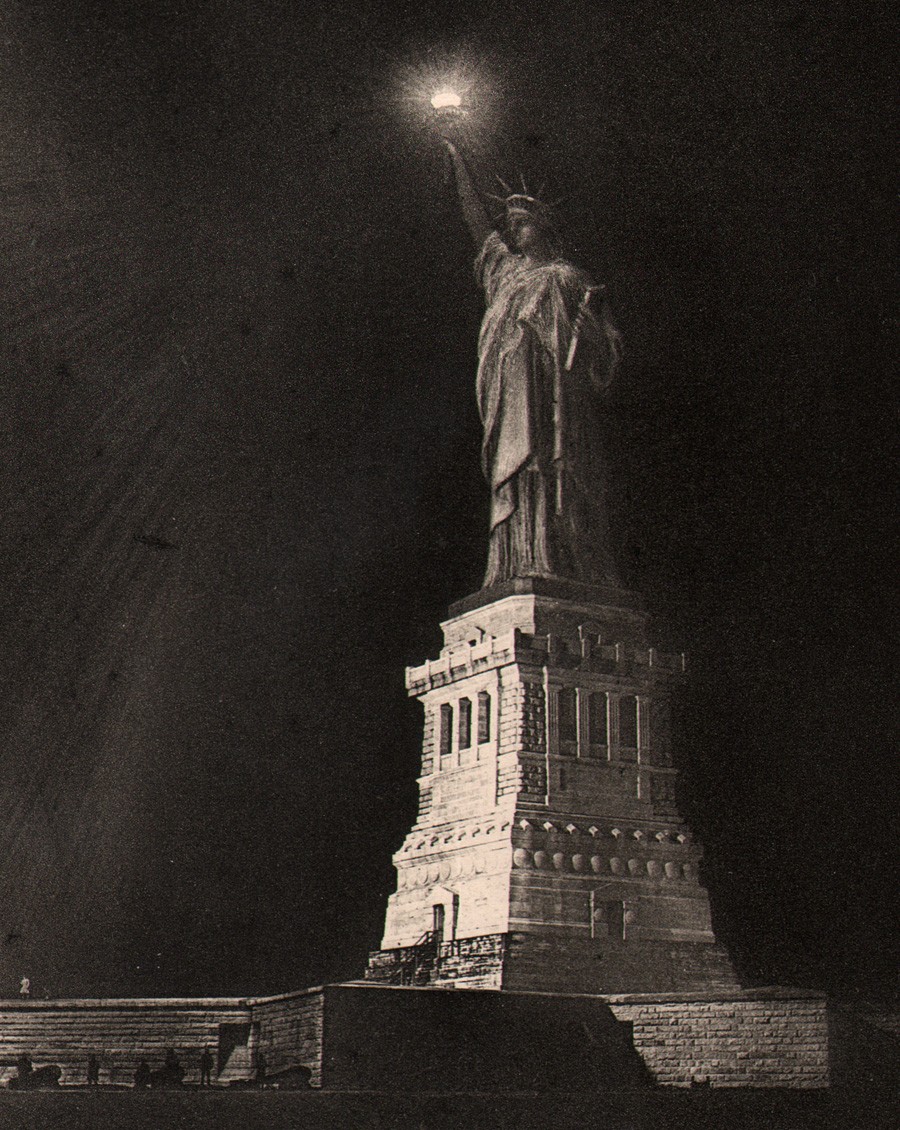
Detail: “Statue of Liberty at Night”: Seneca Ray Stoddard: Hand-pulled photogravure published in periodical “Sun & Shade” New York: September, 1890: whole #25: N.Y. Photogravure Co.: 18.5 x 12.0 cm 35.2 cm x 27.6 cm: For many, the dream of America still holds true in the light, or darkness, of Lady Liberty’s torch-even when viewed against the backdrop of the messy, evolving experiment of a democratic republic called the United States- one fully embraced in the writings of Walt Whitman. A technical description of this photograph copyrighted in 1889 by Stoddard: “Mr. Stoddard employed five cameras on this occasion, stationing them on the Steamboat Pier. A wire was stretched from the torch of the Statue to the mast of a vessel a considerable distance away. Placed on this wire, controlled by a pulley, was a cup containing one and one-half pounds of flash powder; an electric wire was connected with it, and at a given signal the current turned on, by the electrician in charge of the torch, the flash exploded and the exposure made.” from: PhotoSeed Archive

1. from “ThoughtsLeaves of Grass II: The Complete Writings of Walt Whitman: New York:1902: Henry W. Knight, publisher: National (limited) Edition: p. 275
2. excerpt: Walt Whitman Archive online resource accessed July, 2014
Modernism: meet Pictorialism

Mar 2014 | Composition, History of Photography, Significant Photographs

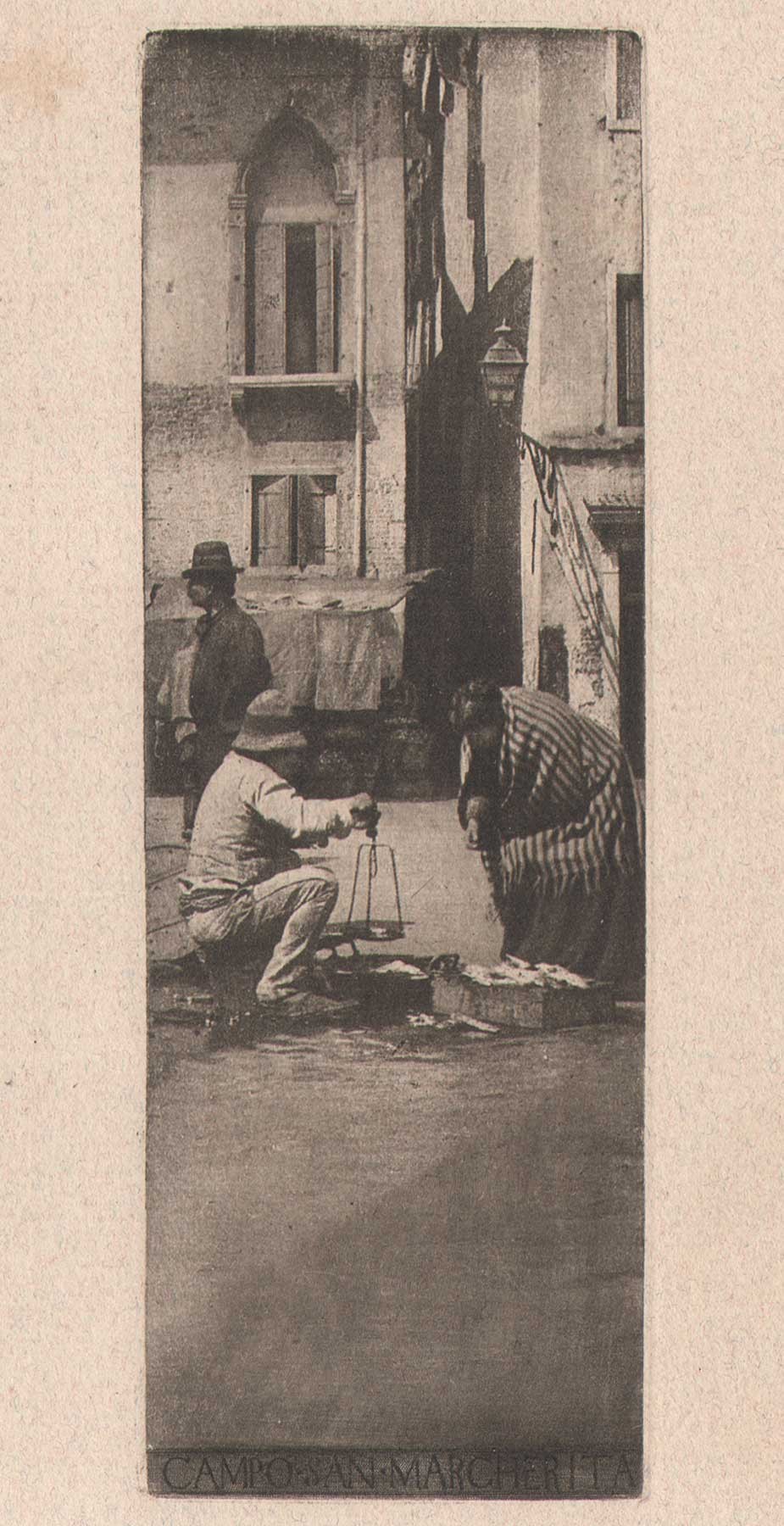
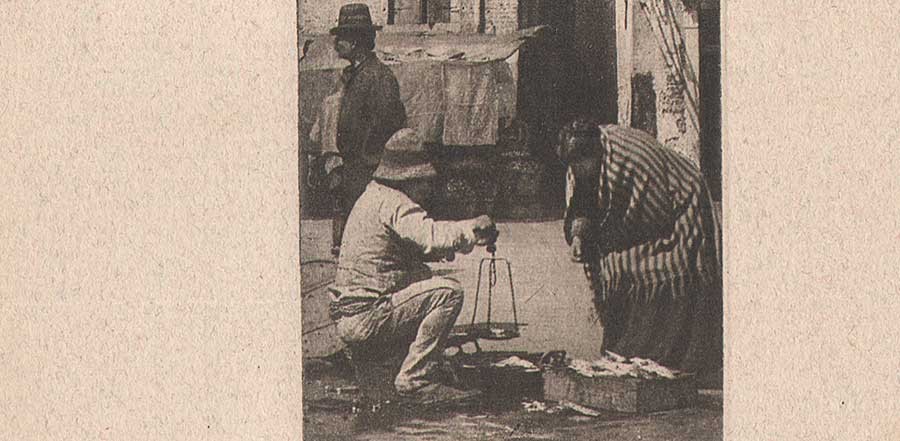
When evaluating the chiaroscuro masterpiece Campo San Margherita by James Craig Annan, a striking vertical composition taken in 1894 during his visit to the Campo San Margherita piazza in Venice-an outdoor market and tourist destination still popular today- the idea of Modernism, a decidedly 20th Century school as applied to the photographic arts, should be taken seriously considering the intent and evidence posed by this finished work.

Detail: “Campo San Margherita”: vintage hand-pulled photogravure by James Craig Annan published in Bulletin de l’Association Belge de Photographie: June, 1897: image: 15.0 x 5.1 cm: laid paper support: 22.6 x 15.0 cm: from PhotoSeed Archive

Documentary, cubist in form and radically pictorial for its time, this slice of life study showing the interaction of a market vendor and customer can be dissected for compositional posterity with the intent a post-mortem of sorts by this reviewer is reason enough when re-considering the historical record of early photographic aesthetics.

First off, Scotsman Annan was a master engraver and pioneer of the hand-pulled photogravure, an intaglio process similar to etching, but with the matrix of a photographic negative “from life” doing the stand-in for the artists brush or pencil. With this control afforded, the photographic results transferred to a copper plate could be altered at will depending on artistic intent, giving Annan the ability to subtly control and change aspects of his composition after he took the initial exposure by camera.

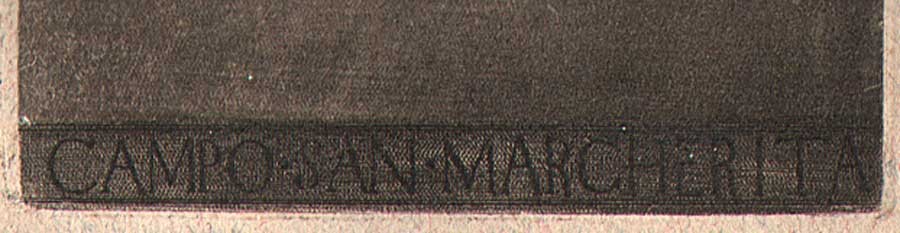
Arbitrarily beginning at the bottom of the frame, a subtle flow begins to develop reaching near the top of this composition. Here we see the Campo San Margherita title, with letters spanning the entire width of the vertical composition placed in its own compartmentalized box serving as anchor to the entire work.

Detail: title: “Campo San Margherita”: vintage hand-pulled photogravure by James Craig Annan published in Bulletin de l’Association Belge de Photographie: June, 1897: image: 15.0 x 5.1 cm: laid paper support: 22.6 x 15.0 cm: from PhotoSeed Archive

From here, the eye travels upwards. With an engraver’s burin, Annan deliberately alters a portion of highlighted marketplace cobblestones to a shaded version- the result being complimentary, contrasting diagonals now taking residence within the dead-zone of space created by his decision to present the work as an extreme vertical composition from the outset.

This in turn brings us to the very center of the frame. Without reading too much into it, the scale itself is the perfect symbol for what Annan achieves in this area we are most interested in visually. Holding it out while weighing a marketplace purchase for his customer opposite, the vendor’s action gives credibility to the idea a kind of balance has been created and achieved at the very center of the frame, especially after she conveniently stoops to his same level while contemplating the purchase.

The rest of the frame serving as backdrop to this drama in the middle compliments everything else within in, but with a twist. Instead of a purely static presentation of a lone moment occurring in the marketplace, the hat-wearing gentleman walking directly behind the vendor preparing to bust out of the frame gives a refreshing jolt to the work. Annan’s inclusion of this other action reminds us the marketplace bustles with life.

Finally, the central part of the background: a large shaded alleyway dividing two separate buildings anchoring the entire left and right margins of the frame, neatly compliments the balance of the two windows seen behind the man wearing the hat. Here, the area of the arched window frame in the top left of the composition reaches upwards to its natural conclusion: another area of naturally shaded discoloration similar in tone and effect Annan manipulated for the bottom third of the frame.

“Campo San Margherita”-cropped to include part of margins: vintage hand-pulled photogravure by James Craig Annan published in Bulletin de l’Association Belge de Photographie: June, 1897: image: 15.0 x 5.1 cm: laid paper support: 22.6 x 15.0 cm: from PhotoSeed Archive

But this is just one opinion, albeit from someone who has spent a lifetime constructing and deconstructing photographs. Hopefully, this insight into one singular example of Annan’s art might give others the chance to see his motives and intent for what they are: a strong example of photographic Modernism ahead of his time.

David Spencer-

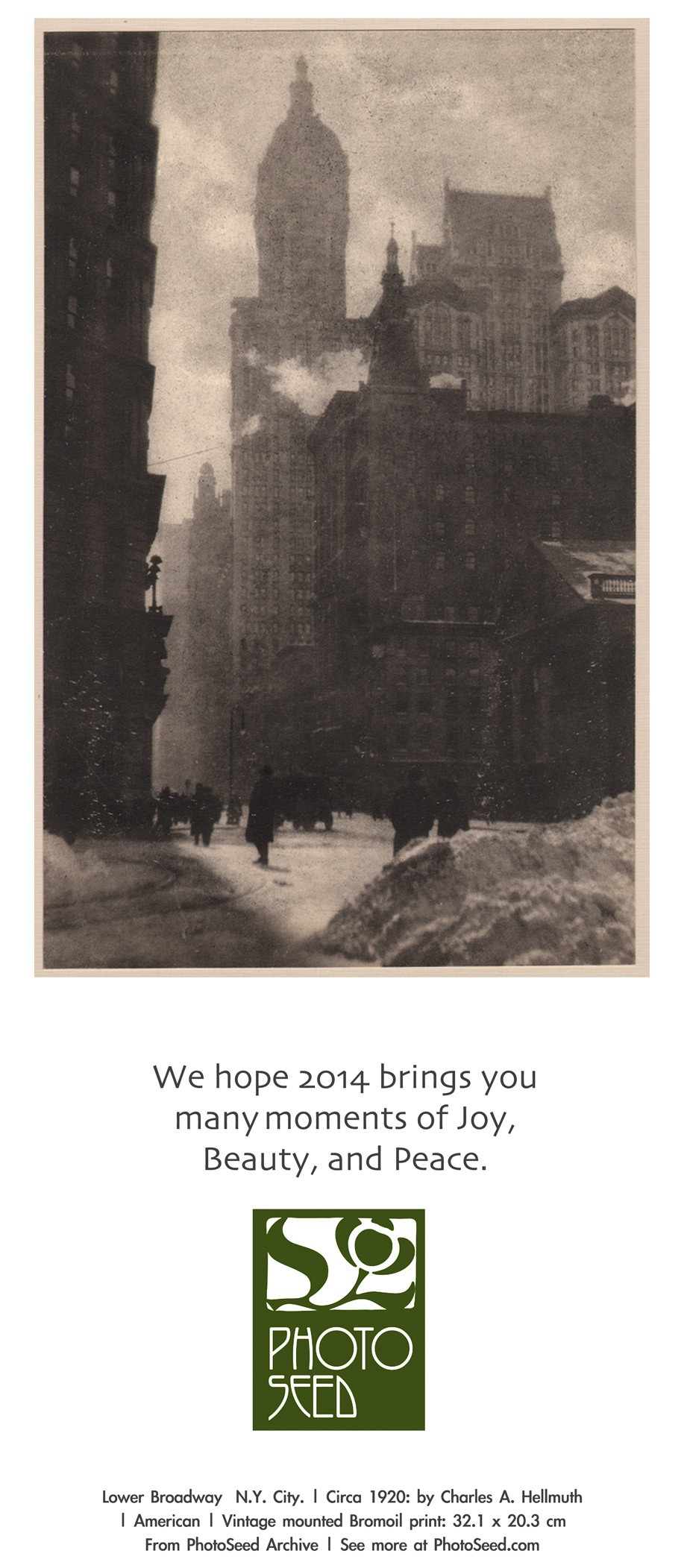
New Year Greetings

Jan 2014 | New Additions, PhotoSeed, Significant Photographs

Christmas Spirit

Dec 2012 | Childhood Photography, New Additions, Significant Photographs

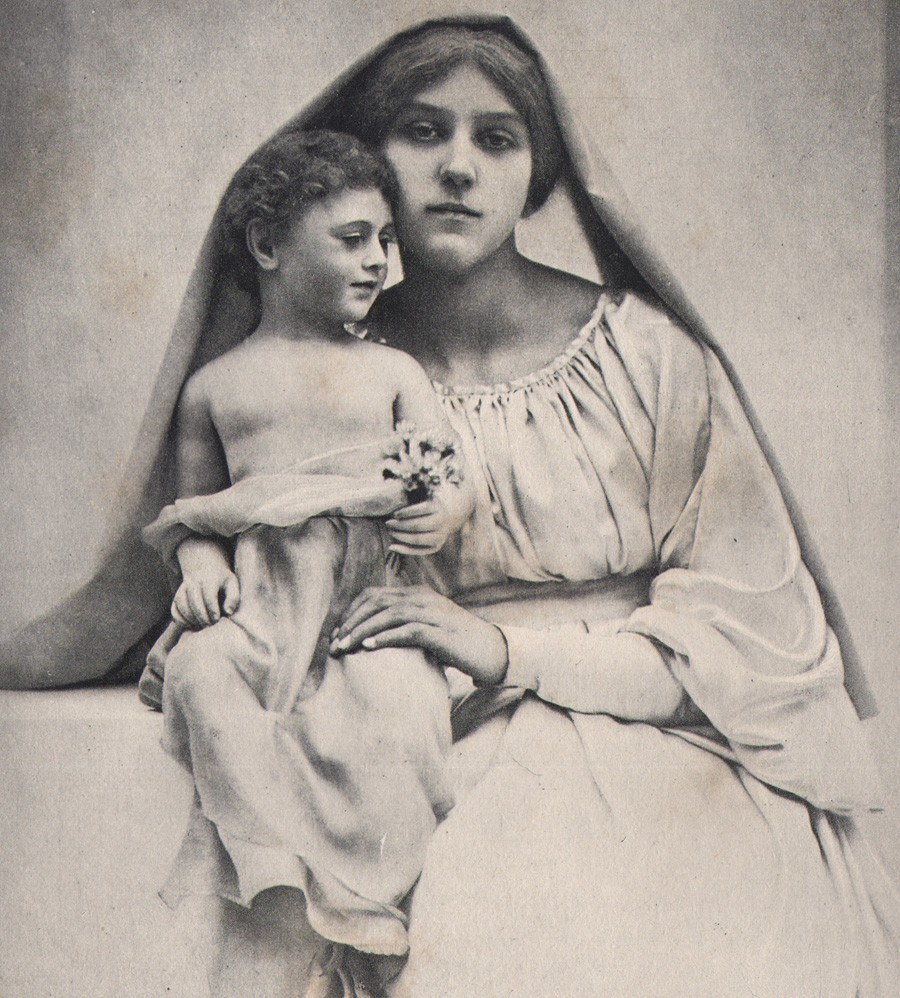
Detail: 1895: “LA VIERGE A L’ENFANT”, (The Virgin and Child) Baron Adolph de Meyer: hand-pulled photogravure from: Bulletin du Photo-Club de Paris: December, 1896: 17.1 x 12.1 cm | 27.2 x 19.7 cm: PhotoSeed Archive

Decadent Dandy

Apr 2012 | Significant Photographs, Texts

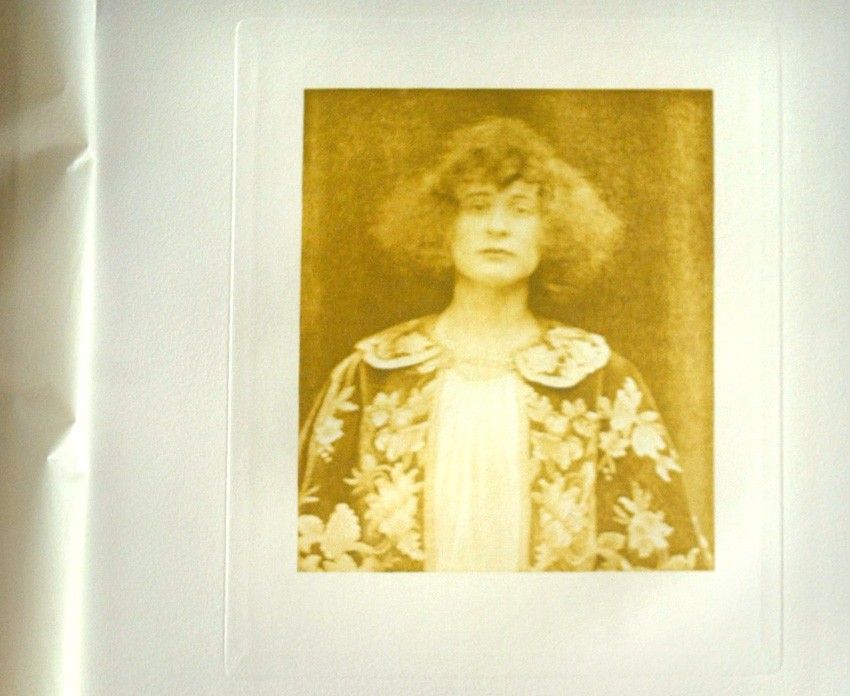
No matter the evidence, in this case-the title assigned to it: Portrait de M. Peters I refused to believe my eyes. That’s why I initially tagged it Portrait: Woman on this site: a most strange, mysterious and striking study of a woman with frizzed-out hair—or so I thought: a hand-pulled photogravure tinted in yellow hues— which made up the final plate included in the 1894 portfolio Première Exposition d‘Art Photographique. (First Exposition of Art Photography) The work was issued by the Photo-Club de Paris that year for their very first exhibition which took place at the Georges Petit galleries in Paris from January 10-30th.

An American in Paris: actor and poet William Theodore Peters (1862-1904) is the subject of this portrait by English photographer Eustace Calland reproduced as the final plate in the “Première Exposition d‘Art Photographique” portfolio issued in 1894. Detail of plate showing tissue guard and plate marks: image: 13.9 x 11.8 cm: planche LVI

 But now thanks to a chance encounter with the photo reproduced in the English journal The Studio, I now know the truth, and have subsequently updated the tag to Portrait: Men:

The Portrait from life, by Mr. Eustace Calland, is a costume study of Mr. William Theodore Peters—as Bertrand de Roaix. The photograph, we understand, is now being exhibited at Paris. Mr. Peters is the author of a forthcoming volume of verse, containing, among other numbers, the Pierrot of a Minute, a charming poem already familiar through the author’s recitation in public.  (1.)

And so it was not a woman who English photographer Eustace Calland (1865-1959) depicted but a man: the American poet and actor William Theodore Peters. (1862-1904) A quick online search of Peters gave me the impression he may have been the poster child for Decadence with a capitol D exemplified by 1890’s Paris. (2.) Someone who in the immortal words of American comic Steve Martin might have well stood in for the original “One Wild and Crazy Guy.” Peters lifestyle caught up with him however, and he is reported to have died in that city in poverty- not even 40 years old.

Since it was exhibited in January, 1894 in the Photo-Club de Paris exhibit, this portrait of Peters was most likely taken sometime in 1893. Another intriguing aspect of the photograph is a cloak he wears in it. As I don’t think it is a coincidence, I’m going to connect the dots here and conclude this post by going further: this is the very cloak made famous by Peter’s friend, the English poet and playwright Ernest Christopher Dowson, (1867-1900) who finished penning the following lines in August, 1893  (3.)  with the title:

To William Theodore Peters on his Renaissance Cloak


The cherry-coloured velvet of your cloak
   Time hath not soiled: its fair embroideries
Gleam as when centuries ago they spoke
   To what bright gallant of Her Daintiness,
   Whose slender fingers, long since dust and dead,
   For love or courtesy embroidered
The cherry-coloured velvet of this cloak.

 
Ah! cunning flowers of silk and silver thread,
   That mock mortality? the broidering dame,
The page they decked, the kings and courts are dead:
   Gone the age beautiful; Lorenzo’s name,
   The Borgia’s pride are but an empty sound;
   But lustrous still upon their velvet ground,
Time spares these flowers of silk and silver thread.

 
Gone is that age of pageant and of pride:
   Yet don your cloak, and haply it shall seem,
The curtain of old time is set aside;
   As through the sadder coloured throng you gleam;
   We see once more fair dame and gallant gay,
   The glamour and the grace of yesterday:
The elder, brighter age of pomp and pride.    (4.)

Ten years after these lines were written Peters and Dowson were both dead, with this portrait by Calland possibly being the sole surviving image known of Mr. William Theodore Peters.

1. The Studio: An Illustrated Magazine of Fine and Applied Art: London: Offices of the Studio: Vol. II: 1894: p. 138 (photograph appears on p. 139)
2. “He was, as an irreverent American once said of him, that “rara avis in human kind,—a poet with money,” and so stole time from his verse-making to give charming little dinners, the lists of which were redolent with Lady This and Countess That, since he knew nearly every woman of title, native or sojourner, in Paris.”: excerpt: Verses Written in Paris by Various Members of a Group of “Intellectuals”: in: The Critic: An Illustrated Monthly Review of Literature, Art and Life: New Rochelle, New York: Vol. XXXIX: 1901: pp. 38-39
3. notes: Ernest Dowson Collected Poems: edited by R.K.R. Thornton: University of Birmingham Press: 2003: pp. 257-258
4. included in: The Poems of Ernest Dowson: Dodd, Mead and Company: New York: 1922: pp. 144-145

Reverie

Feb 2012 | Publishing, Significant Photographs, Texts

When photographer and photographic supply dealer Henry Greenwood Peabody of Boston compiled and self-published the oblong quarto volume The Coast of Maine: Campobello to the Isles of Shoals in 1889, he offered it for sale by subscription, advertising it along with the fact he was the sole American agent for Wray lenses in photographic journals including Anthonys.

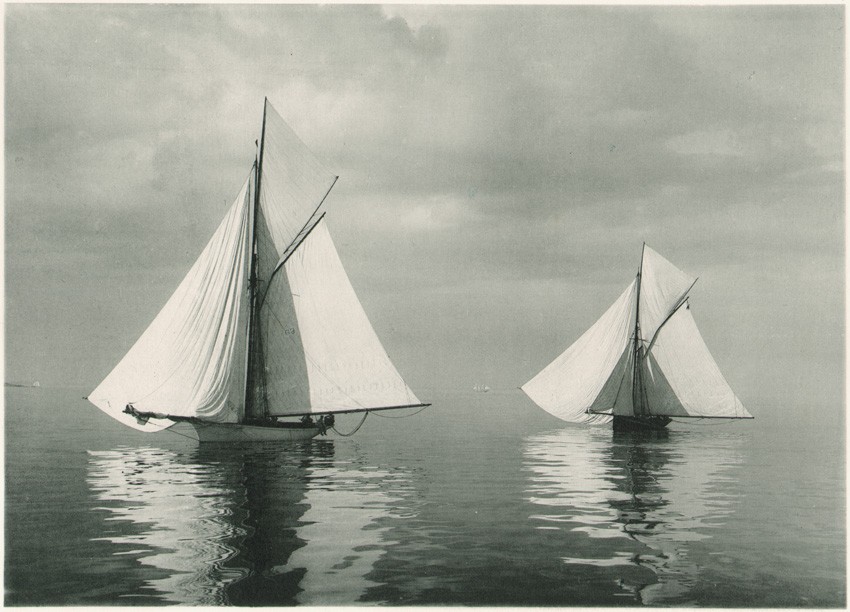
“Wing and Wing”, (16.3 x 22.7 cm) one of fifty plates reproduced by the photo-gelatine (collotype) process by the Photogravure Company of New York in the volume: The Coast of Maine: 1889: published by Henry G. Peabody, 53 Boylston Street, Boston.

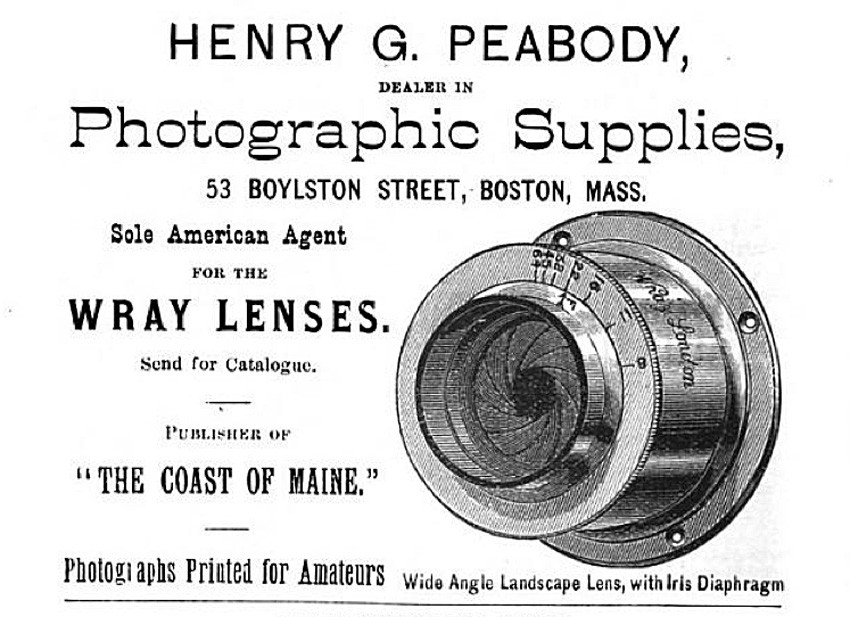
These lenses were first manufactured in London by a gentleman named William Wray beginning in 1850. Peabody, presumably using a Wray lens or lenses outfitted on his 8 x 10″ view camera, had scoured the rocky Maine coastline the year before in search of the picturesque. The published results in The Coast of Maine included 50 full size plates, done using the very fine photo-gelatine process, (collotype) a specialty of Ernest Edward’s Photogravure Company of New York. These plates, most of which show the coastline in proximity to the ocean; multiple lighthouse views but surprisingly very few boats, (Peabody was an important photographer of sailboats on the high seas) are supplemented with poetry and prose by seven writers, including the American poet and writer Celia Thaxter. (1835-1894)

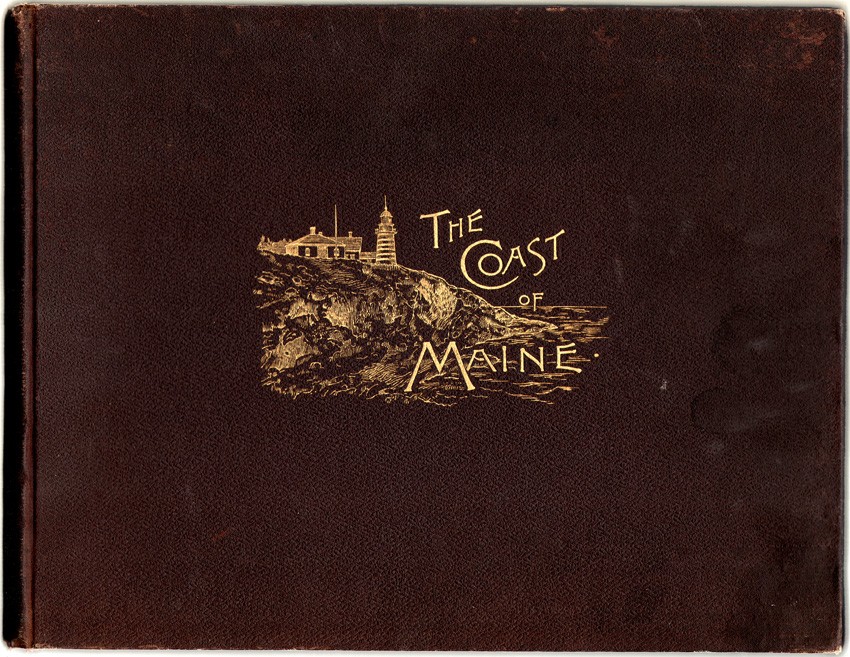
The artist J.E. Hill is credited as having done the drawings appearing in “The Coast of Maine: Campobello to the Isles of Shoals”, published in 1889 by photographer and at the time, photographic supply house owner Henry Greenwood Peabody of Boston. Hill’s work can be seen here embossed in gilt on the cover of the volume. (27.4 x 35.5 x 2.5 cm) Additional Hill drawings appear as vignettes opposite many of the plates in the book.

Her poem Reverie had been first copyrighted as early as 1878 and published in 1880 in her collection of poems titled Drift-Weed in Boston. Although this long-form poem predates the above photo Wing and Wing by at least ten years, Peabody paired it in double columns opposite this lone sailboat photograph (in full sail) appearing in the work.

Reverie

The white reflection of the sloop’s great sail
Sleeps trembling on the tide;
In scarlet trim her crew lean o’er the rail,
Lounging on either side.

Pale blue and streaked with pearl the waters lie
And glitter in the heat;
The distance gathers purple bloom where sky
And glimmering coast-line meet.

From the cove’s curving rim of sandy gray
The ebbing tide has drained,
Where, mournful, in the dusk of yesterday
The curlew’s voice complained.

Half lost in hot mirage the sails afar
Lie dreaming still and white;
No wave breaks, no wind breathes, the peace to mar:
Summer is at its height.

How many thousand summers thus have shone
Across the ocean waste,
Passing in swift succession, one by one,
By the fierce winter chased!

The gray rocks blushing soft at dawn and eve,
the green leaves at their feet,
The dreaming sails, the crying birds that grieve,
Ever themselves repeat.

And yet how dear and how forever fair
Is nature’s kindly face,
And how forever new and sweet and rare
Each old familiar grace!

What matters it that she will sing and smile
When we are dead and still?
Let us be happy in her beauty while
Our hearts have power to thrill.

Let us rejoice in every moment bright,
Grateful that it is ours;
Bask in her smiles with ever fresh delight,
And gather all her flowers;

For presently we part: what will avail
Her rosy fires of dawn,
Her noontide pomps, to us, who fade and fail,
Our hands from hers withdrawn?

Celia Thaxter.

Advertisement showing wide angle Wray landscape lens with iris diaphragm manufactured in London from: “The International Annual of Anthonys Photographic Bulletin”: New York: 1889: from p. 98 of the advertising section in the rear of the volume. Photographer Henry Peabody is believed to have used a similar Wray lens for photographs appearing in the volume “The Coast of Maine” published by him in 1889.

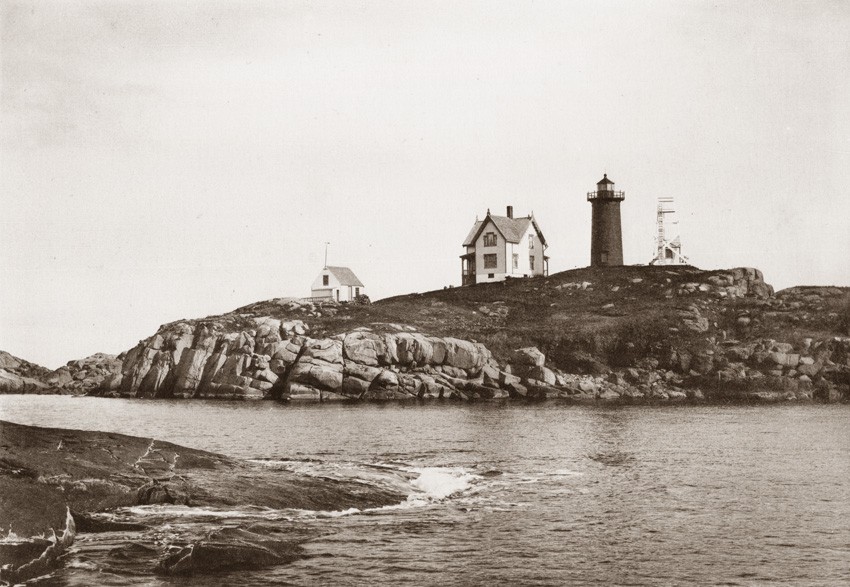
This is an example of one of several lighthouse plates: “The Nubble : York, ME” (15.6 x 22.5 cm) taken by photographer Henry Peabody and published as a full-page photo-gelatine (collotype) plate in “The Coast of Maine” in 1889. The view shows the Cape Neddick “Nubble” Light near the entrance to the York River. The light continues to operate today.


1 2 3 4